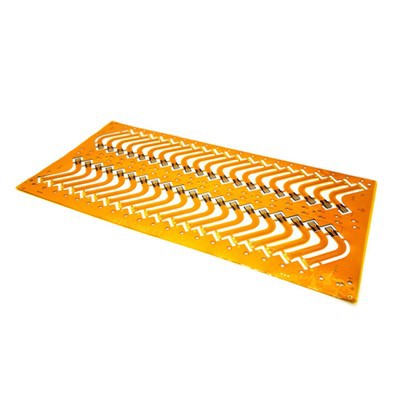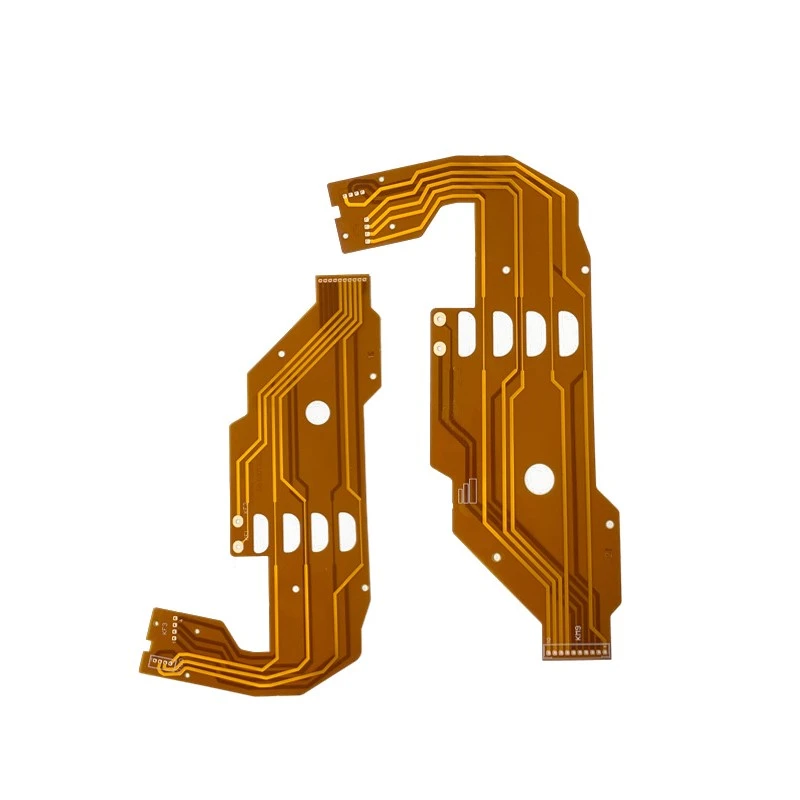


Flexible Printed Circuit Cable is a printed circuit board with high reliability and excellent flexibility made of flexible copper-clad laminate as the base material. As an important category of PCB, flexible PCB has the advantages of high wiring density, lightweight, thin thickness, folding and bending, three-dimensional wiring, and other types of circuit boards that can not be compared, and is widely used in modern electronic products.
FPC's current market environment
With the 5G communication technology, automotive intelligence and electrification, wearable devices, the Internet of Things and military intelligence, and other technological upgrades brought about by the volume of demand, the FPC industry is ushering in a new round of development. According to the analysis of market research institutions, these opportunities mainly come from:
1, automotive intelligence and electrification brought about by the substantial growth in demand for FPC, such as new energy vehicles, power battery modules in the larger-scale use of flexible PCB to replace the traditional copper wire harnesses effectively pulling the demand for FPC industry, the number of automotive displays and the size of the increase in the market for FPC directly brought to the car display multiples of the growth in demand for car sensors increase the increase in the amount of FPC demand;
2, miniLED demand for rapid improvement. miniLED program due to the brightness uniformity and contrast than the traditional display program with better performance, and long service life, moderate price, become the mainstream application of the current backlight market. Mini LED can be used as a substrate for ultra-thin hardboard or FPC, etc., with the miniLED in the AR/VR, laptop computer, With the gradual promotion of miniLED in AR/VR, notebook computers, and flat panel field, the demand for miniLED substrate will meet a larger growth;
3, meta-universe explosive growth. AR / VR and other XR equipment due to the small size of the device, the need to integrate a large number of electronic components in a limited space, to meet the lightweight, high-performance, and high-level high-end HDI boards and FPC boards have a greater demand for FPC boards will be with the increase in shipments of XR equipment and the demand for climbing;
4, the rapid development of the military aerospace industry. In recent years, with the changes in international relations, the arms race between the major countries into white-hot, and in recent years some private background aerospace companies began to develop, low-orbit satellites as the main products that have achieved rapid development, Flexible Printed Circuit Cable can be used for low-orbit satellites, flexible wings and cabin connections, greatly reducing the original rigid structure of the space and the weight of the traditional cable to enhance the collapsibility.
In the downstream, the most widely used flexible board products are smartphones, smartphone industry after the development of the past decade, the penetration rate has reached a high point to enter a stable development stage, superimposed on the decline in the past three years of residents' consumption power, smartphone innovation and other factors, smartphone sales declined year-on-year, into 2023, the smartphone industry continues to continue the downward trend.
According to statistics from CANALYS, global smartphone sales in the first quarter of 2023 were 270 million units, down 13% year-on-year, while sales in the second quarter were 258 million units, down 10% year-on-year, and overall sales in the first half of the year were 528 million units, down 12% year-on-year.
In the case of the smartphone industry decline, automotive intelligence, and electrification bring new industry opportunities, 2023 first half of the country's new energy vehicles continue to continue the trend of growth, with sales reaching 3.747 million, an increase of 44.1% year-on-year; first half of the cumulative sales of power batteries reached 265.5GWh, an increase of 17.5% year-on-year, while the sales of energy storage batteries also reached 8.7GWh. Meanwhile, with the enhancement of automobile intelligence, soft board products will be used in car screens, car cameras, car radar, lights, and other parts, so automobile intelligence and electrification will bring new development space for softboard products.
FPC commonly used several kinds of laminated structure
1,Single Panel
Made of single-sided copper-clad materials, after the line is completed, then covered with a layer of protective film or coating, forming a single layer of conductors only flexible circuit boards.
2,Ordinary double-sided board
The use of double-sided copper-layered board material in the double-sided circuit is completed, respectively, plus a layer of protective film on both sides, to become a circuit board with a double layer of conductors.
3,Single-sided board with substrate generation
The use of two layers of single-sided copper-laying board material in the middle of the bonding adhesive supplemented by a window in a specific location for the press, to become a local area of the press, the local area of the two layers of the separate structure of the double-sided conductor circuit boards to achieve the delamination of the area with a high degree of flexural properties of the circuit board.
4,Multilayer board
Single-sided copper-layered board materials and bonding adhesive as the basic materials, similar to the substrate to generate a double-sided board process, after several presses into a multi-layer conductor structure of the circuit board, can be designed for the local layering structure to achieve a high degree of flexural properties.
5,Rigid-flex bonded board (rigid-flex bonded board)
Rigid-flex bonded printed circuit boards are composed of rigid and flexible substrates selectively laminated together in a compact structure, with metallized holes to form conductive connections. Each rigid-flex bonded printed board has one or more rigid areas and one or more flexible areas.
What are the advantages of flexible FPC connectors in the market?
 1, rapid miniaturisation
The use of flexible printed circuit connectors is currently increasing significantly in electronic products such as automotive electronics and medical electronics.
As one of the main functional accessories of flexible circuit boards, FPC connectors have now become one of the main categories of flexible circuit board production, in line with the trend of rapid miniaturisation of electronic devices such as smartphones. It can be said that the development of FPC connectors is triggered by the flexible circuit board, and this has an increasing impact.
2, high-density integration and high reliability
As FPC connectors emphasise high-density integration and high reliability, it meets the development needs of electronic products.
For example, in the automotive market, FPC connectors are mainly used for GPS devices, LCD monitors, radios, and entertainment equipment. In the medical field, due to the miniaturisation of medical devices, FPC connectors are widely used in handheld devices, including patient detectors. FPC connectors are also used in the military and aerospace fields due to their lightweight, high integration, and high wiring density.
3, good available space and connectivity is extensive
Flexible FPC connectors can effectively utilise the available space, i.e. the space above the PCB and inside the housing. In addition to cost savings, it allows for high wiring density designs, which are popular in many electronic devices on the market.
Another advantage is its ability to connect different devices because it is small and has very important characteristics. For example, in a digital camera, the FPC connector can be used to unplug the display or flexibly adjust its position while the camera body remains connected to the appliance.
As a result, it is easier to use a digital camera in this way, and small changes can bring more convenience to consumers. In addition, the connection between a laptop computer display and a mobile phone body is difficult to operate without an FPC connector, which hinders the development of electronic products.
What factors determine the flexural properties of FPCs?
A, flexible PCB material itself to see the following points on the FPC flexural performance has an important impact.
First, the molecular structure and direction of the copper foil (i.e. the type of copper foil).
The flexural performance of calendered copper is significantly better than electrolytic copper foil.
Second, the thickness of copper foil
The thinner the thickness of the copper foil, the better the folding resistance of the same type of copper foil.
Third, the type of adhesive used in the substrate
Generally speaking, epoxy resin adhesive is better than acrylic adhesive system of its flexibility. So in the requirements of high flexibility material selection to epoxy-based. And tensile modulus (tensile modulus) higher glue can improve the flexibility.
Fourth, the thickness of the rubber
The thinner the thickness of the rubber, the better the flexibility of the material. Flexible FPC can be improved.
Fifth, the insulation substrate
The insulation substrate PI thickness the thinner the material's flexibility, the better, the FPC flexural improvement, and the selection of low tensile modulus (tensile modolos) of the PI on the FPC flexural performance is better.
Summarise the material for the flexing of the main factors affecting the two main aspects: the choice of material type; material thickness
B, from the flexible printed circuit process to analyse the impact of its flexural.
First, the symmetry of the FPC combination
In the substrate after the laminated cover film, copper foil on both sides of the symmetry of the material the better to improve its flexural properties. Because of its flexure in the stress suffered by the same.
PCB board on both sides of the PI thickness tends to be the same, and PCB board on both sides of the adhesive thickness tends to be the same.
Second, the control of the press process
In the coverlay pressing requirements of the glue filled to the line in the middle, there must be no delamination phenomenon (slicing observation). If there is a layered phenomenon in the flexure is equivalent to bare copper in the flexure will reduce the number of flexure.
Group Profile
ZHUHE Group has been a comprehensive service provider of electronic technology and electronic products for more than 10 years. Starting from a small company, we have continued to expand the field of electronic applications and provide customers with advanced intelligent control solutions, and have grown to have 11 subsidiaries of our own. We can provide professional OEM/ODM services for our customers. The company is well-managed and insists on providing quality products and services to customers.

The Group has diversified products and technologies, including semiconductor devices, pulse motors, high-frequency transformers, inductors, and PCBA (Printed Circuit Board Assemblies) and FPCA (Flexible Printed Circuit Assemblies), which are the core components of a variety of electronic products and focuses on the fields of high-speed data transmission and communications, automotive electronics, medical electronics, industrial control products, and new energy technologies. Currently, our main markets are domestic and overseas.

We can provide customers with single and double-sided boards, high and multi-layer boards, soft and hard combination boards, special process flexible boards, etc.; we can also customise the products that customers need according to the drawings or samples provided by customers. We strictly control the product quality at every step of the manufacturing process and provide leading technical support. Before cooperating, we will have a professional technical team to answer your questions. During the co-operation, we have a professional technical team for you. After cooperation, we have special technicians to serve you one to one.

Q: What is the main difference between a rigid PCB and a flexible PCB?
A: The main difference between a traditional rigid PCB and a flexible PCB is:
- Rigid PCBs use FR-4 or other rigid insulating substrates, while Flexible PCBs use thin flexible polymer films as dielectrics.
- Flexible circuits can be bent and flexed repeatedly without damage, whereas rigid boards will break under bending stress.
- Flexible PCBs are very lightweight and thin compared to rigid boards.
- Flexible materials and circuits are more expensive than typical rigid PCB materials and structures.
- Flexible PCBs require special design considerations to ensure dynamic bending reliability.
Q: Should components be mounted on the rigid or flexible portion of the Flexible Printed Circuit Cable?
A: For dynamic bending applications, it is often best to mount components on the rigid portion of the PCB rather than the flexible area. Connecting heavy components directly to the flex area can put excessive stress on the material and alignment, leading to cracking and eventual failure.
Some flexible packaged components (such as resistors or capacitors) can be safely mounted on the flexible section, but any large or heavy components are better suited to the rigid area. Flexible sections should be reserved for alignment wiring only.
Q: How many times can a flex circuit be dynamically bent before failure occurs?
A: Bend life is highly dependent on the substrate material, alignment width/spacing, bend radius, and other design factors. Typical values for common materials under moderate bending stress are:
- Polyimide: 10,000 - 100,000 cycles
- Pen: 20,000 - 50,000 cycles
- PET: 50,000 - 100,000 cycles
- LCP: 500,000+ cycles
Narrow alignments and small bend radii can also reduce bend life. Application requirements must be thoroughly considered to ensure that flexible circuits are designed to support the expected dynamic bending cycles without failure.
Hot Tags: flexible printed circuit cable, China flexible printed circuit cable manufacturers, suppliers, factory, Flexible Printed Circuit Board, , Flexible Fpc, Flexible Printed Board