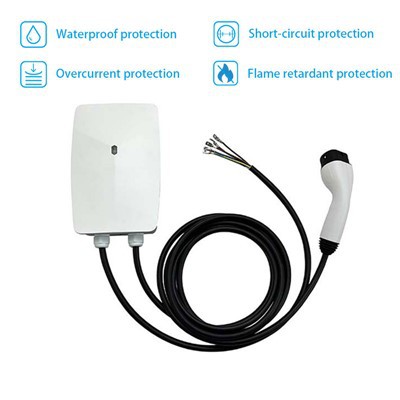
An electric vehicle (EV) Car Charging For Home, also commonly called a charge point or electric vehicle supply equipment, is a device specifically designed to supply electrical power for recharging plug-in electric vehicles. These charging stations come in two primary types: AC charging stations and DC charging stations. Their purpose is to provide a convenient and efficient means for EV owners to recharge their vehicles, ensuring that they have sufficient power for their daily or long-distance journeys.
Can I install electric car chargers at petrol stations?
The world is moving towards electric vehicles and people are starting to turn to eco-friendly options. However, one of the biggest concerns about electric vehicles is the lack of charging infrastructure. Can gas stations install electric vehicle (EV) chargers to meet this need?
The answer is yes! Gas stations can indeed install EV chargers. We are now seeing petrol stations, especially those owned by large oil companies, setting up Car Charging For Home on their premises. This move is a testament to the growing popularity of electric vehicles. However, it is important to note that installing EV chargers requires more than just plugging them in.
Installing EV chargers at petrol stations can be a complicated process. These charging stations require significant infrastructure investment, including the installation of electrical wiring and proper management of electricity demand. Additionally, the station will have to dedicate significant resources to ensure that the installation complies with safety regulations and industry standards.
Another important consideration when installing EV chargers at petrol stations is the type of charger that needs to be installed.
There are three types of chargers - Level 1, Level 2, and DC fast chargers. In most cases, Level 1 chargers are for home use, while Level 2 chargers are faster, but still take several hours to charge a vehicle. On the other hand, DC fast chargers are the fastest and can charge a vehicle in minutes.
Choosing the right type of charger will depend on the location, requirements, and business model of the petrol station.
Despite the complexity of installing EV chargers at petrol stations, the benefits outweigh the costs. Petrol stations can diversify their offerings and embrace the transition to EVs, potentially creating a new revenue stream. By installing EV chargers, they can attract EV drivers while also providing customers with environmentally friendly options. In addition, this move will help petrol stations remain relevant in a rapidly changing market.
All in all, petrol stations can install EV chargers and benefit from the opportunities that come with them. Despite the initial investment, this could be a smart business decision as EV owners are a growing demographic that cannot be ignored. With the right planning and implementation, petrol stations can remain competitive and play an active role in the transition to greener transport options.
How are electric vehicle charging posts tested before they leave the factory?
EV charging station testing is a series of tests carried out to ensure the safety, reliability, and availability of the charging point. The purpose of the tests is to ensure that the charging point works safely and reliably in a variety of situations under normal conditions of use.
Benefits of electric vehicle charge point testing:
- Ensure electrical safety for users, equipment and infrastructure
- Verify that your EV charging station is compliant
- Evaluate the conformance and interoperability of your EV charging stations
- Ensure the electromagnetic compatibility of your charging solution
Firstly, we need to carry out a cosmetic test so that we can quickly see if the charging point has any substandard appearance. Any visible cracks, solder reflow, cracking, etc. should be dealt with promptly. Secondly, we need to carry out the installation test, including the judgement of the installation process and the final installation effect; we should also pay attention to the looseness test and connection strength test of the installed parts. Secondly, there is the inspection of electrical performance: this includes the assessment of the presence and normality of the power supply, the insurance, the braking position, the switches; the withstand voltage and the turn-to-turn tolerance of each component should also be assessed.
Finally, there are tests of functionality, features and usage characteristics. This mainly consists of assessing the level of user attention to the interactive interface, alarm mechanisms, digital display modes, etc.; the normalisation of signal transmission between components; and rechecking it.
In short: a complete charging point test methodology should cover the three aspects of appearance, installation, and function/features/usage characteristics to measure whether a high-quality EV charging point is properly prepared before it leaves the factory.
Impact of Electric Vehicle Chargers on the Grid
 1. Increased energy demand
With the rapid expansion of the electric vehicle (EV) market, more and more consumers are choosing EVs as their daily travelling tools. This means that the energy demand for charging piles is also growing rapidly. Compared with traditional fuel vehicles, the energy demand for EVs mainly comes from the power grid, especially during peak charging hours, when the centralised charging demand from charging piles puts higher demands on the power supply capacity of the grid. To meet the growing demand for EV charging, the power grid needs to increase its power supply capacity accordingly and expand or upgrade its power facilities to ensure a stable supply of electricity.
2. Increased load fluctuation
The charging behaviour of electric vehicles has greater randomness and volatility, which brings challenges to the load balance of the power grid. As the charging time, charging location, and charging volume of EV users vary, the power demand of charging piles is also uncertain. During peak charging hours, a large number of EVs charging at the same time may lead to a rapid increase in grid load, while during charging trough hours, the grid load may drop significantly. Such load fluctuations not only increase the difficulty of grid scheduling but may also have an impact on the stable operation of the grid.
To cope with the challenges posed by load fluctuations, power grids need to adopt advanced scheduling technologies and energy storage devices to balance power supply and demand. For example, the grid can perform dynamic scheduling based on the real-time power demand of charging piles, and reasonably allocate power resources to individual charging piles. At the same time, the power grid can also use energy storage equipment to release power at peak load times and absorb power at low load valleys, thus effectively balancing the power grid load.
3. Grid security risks
Failure or improper operation of Car Charging For Home may cause security risks to the power grid. Firstly, the electrical equipment of the charging pile may have quality problems or aging phenomena, leading to safety problems such as electrical failure or short circuits. Secondly, the installation and maintenance of charging piles may not be standardized, such as not being installed by the relevant standards, or not being serviced and maintained on time. These problems may cause voltage fluctuations, current shocks, and other safety hazards to the power grid, and may even lead to power grid accidents in serious cases.
Ensuring the reliability of electric vehicle charging stations
1. Installation of high-quality charging infrastructure
The charging infrastructure is the backbone of the charging station. It is therefore crucial to ensure that the installed charging infrastructure is of high quality. The charging infrastructure should be able to provide the necessary electrical capacity and be suitable for all types of electric vehicles. It is also important to ensure that charging cables and connectors are of high quality and comply with industry standards.
2. Ensure proper installation and maintenance
Once you've chosen your EVSE, it's vital to make sure it's installed correctly. Use a certified installer who has experience with EV charging systems and is familiar with relevant safety standards and requirements.
In addition, regular maintenance is vital to ensure the reliability of your EVSE. Routine maintenance must be scheduled so that any problems can be identified and fixed before they escalate into major issues. Regular maintenance includes checking for electrical problems as well as cleaning and replacing parts.
3. Monitor charging station performance over time
Monitor your charging stations over time and make sure they are functioning properly. Monitoring data from charging sessions helps to identify problems before they become serious. Track and analyse this data to determine if the station needs further maintenance or repair.
Depending on your monitoring software, you should be able to implement 24/7 alerts and automated troubleshooting. 24/7 alerts should be set up to notify operators when charging stations exceed predetermined thresholds. These alerts can help owners quickly resolve issues and prevent further downtime or disruption.
When installing a remote monitoring system for your EV charging station, make sure it is compatible with your existing infrastructure and can monitor all the features you need to track.
Group Profile
ZHUHE Group is a comprehensive service provider of electronic technology and electronic products for more than 10 years. Starting from a small company, we have continued to expand the field of electronic applications and provide customers with advanced intelligent control solutions, and have grown to have 11 subsidiaries of our own. We can provide professional OEM/ODM services for our customers. The company's management is standardized and insists on providing customers with high-quality products and services.

The company's intelligent controller products cover intelligent home, household appliances, industrial control, and other related intelligent control products. The company has a strong R & D team and a professional automated production line, the gradual introduction of advanced production equipment and an increase in the degree of automation of the production line investment, to enhance production capacity and manufacturing process level, the establishment of a perfect quality management system and supply chain system; to provide the best quality of intelligent control solutions and products, and at the same time can provide OEM / ODM / JDM services.

ZHUHE upholds the spirit of independent innovation to continue to deepen the ODM business, to develop the new energy vehicle market, with a strong innovative ability to provide strong technical support for the development of the industry, and the whole industrial chain of synergistic innovation, for new energy projects to provide planning and design, technical support, engineering and construction, intelligent operation of the integration of one-stop service, with solid strength of patented technology for the industry to provide professional services and outstanding products.

Q: How long does it take to charge my car?
A: This depends on the size of the battery in your car and the amount of power available at the charging point. Typically, plug-in hybrids (e.g. Golf GTE, Prius) charge at 3.7kW and are fully charged in 3 hours. Fully electric cars (e.g. Tesla) can be charged at 7.4kW using a single-phase supply but have much larger batteries, with a 75kWh Tesla Model S taking 10 hours to fully charge. 3.7kW charging charges at around 12 mph and 7.4kW charging at around 24 mph.
Q: Do I need different chargers for different EVs?
A: There are two standard connectors for different EV models (Type 1 and Type 2), the market is moving towards using Type 2 as the standard connector but there are charging points for both types and there are also Type 1 to Type 2 adaptor cables.
Q: Can I install Car Charging For Home?
A: Yes, you can install an EV charger at home. If you have a driveway, installing a 3.6kW or 7 kW charger takes only a few hours and may not require changes to your current power supply. More powerful home chargers require a three-phase power supply, which is not standard in most homes, making installation more complicated.
Before booking a home installation, you may want to consider the most convenient place to put your EV charger. This could be located next to where you usually park your car on the driveway or in the garage. Ultimately, a qualified electrician who installs charge points will determine whether your preferred location is suitable.
Hot Tags: car charging for home, China car charging for home manufacturers, suppliers, factory, , Type 2 Charging Station