


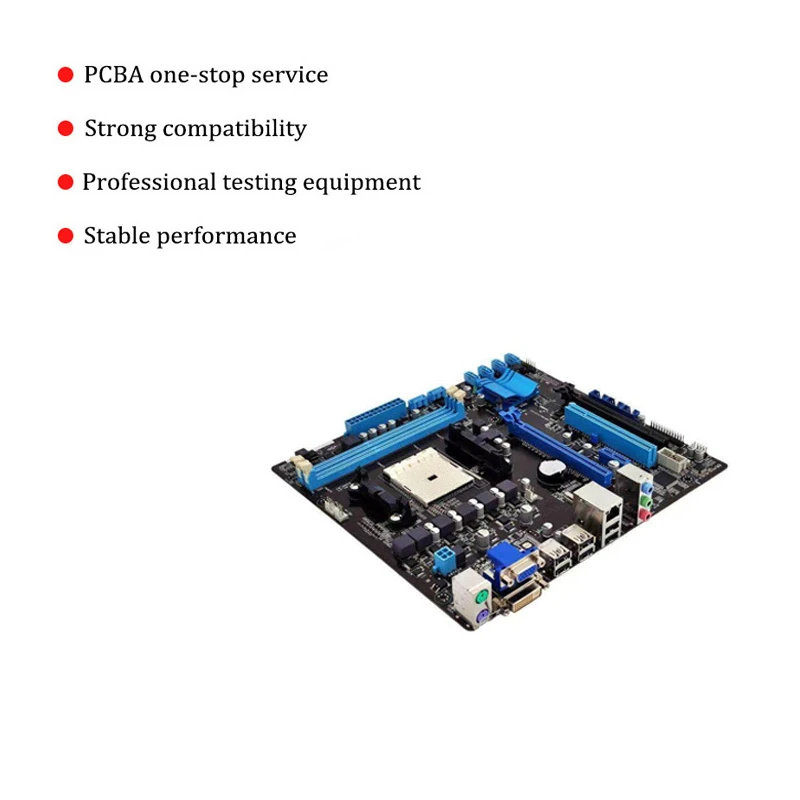

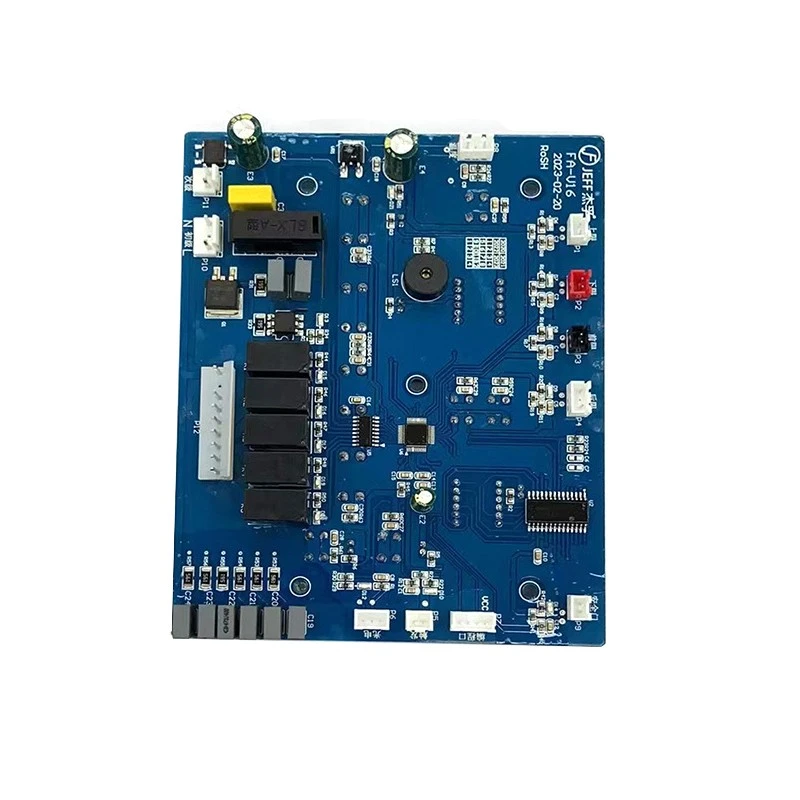


ASM PCB (Printed Circuit Board Assembly) is a basic board used to support and connect electronic components. It is made of one or more layers of composite material with copper conductors on the surface to form electrical connections and connect the layers through holes.PCB is widely used in various electronic devices, such as computers, cell phones, communication equipment, medical instruments, etc., to provide circuit connections and signal transmission.
As the core component of electronic products, the performance stability of the circuit board directly determines the reliability and life of electronic products. The soldering quality of components is an important factor affecting the performance of circuit boards. Poor soldering not only leads to circuit connection problems but also may trigger early failure of the circuit board.
The impact of soldering quality on the performance of the circuit board
1. Reliability of electrical connections
The quality of the solder joints, as the electrical connection between the components on the circuit board and the conductive track, is directly related to the connectivity of the circuit and the efficiency of signal transmission. Excellent soldering quality can ensure that the solder joints have good electrical properties, including low resistance and high conductivity, which is critical to the stable operation of the circuit board. On the contrary, if there are defects in the solder joints, such as false soldering, cold soldering insufficient soldering, etc., it will lead to unstable circuit connections or even broken circuits, which will seriously affect the function and reliability of the circuit board.
In the application of high-frequency signal transmission, the quality of solder joints has a particularly significant impact on the quality of signal transmission. Poor soldering can lead to signal reflection, refraction, or attenuation, which in turn affects the rate and stability of data transmission. In addition, the electrical properties of the solder joints are also affected by the surrounding environmental factors, such as temperature and humidity, which require that the quality of the soldering is not only guaranteed at the initial stage but also needs to have long-term stability and reliability.
2. Impact of thermal cycling on solder quality
Thermal cycling refers to the cyclic changes in temperature experienced by the circuit board during use due to changes in operating conditions, and this process has a significant impact on the stability of the solder joint. With the cyclic increase and decrease in temperature, the difference in the coefficient of thermal expansion between the solder joint and the circuit board material will cause mechanical stress, and long-term cycling will lead to fatigue of the solder joints, or even cracks, thus reducing the mechanical strength and electrical stability of the solder joints.
The choice of solder material plays an important role here. For example, lead-free solder has a higher melting point compared to conventional tin-lead solder, which makes lead-free solder joints more susceptible when subjected to high-temperature cycling, leading to a reduction in solder joint reliability. Therefore, for electronic devices that operate under extreme temperature conditions, selecting the right solder material and optimizing the soldering process is key to improving solder quality. The use of appropriate thermal management measures, such as adding a heat diffusion layer in the circuit board design, the use of thermal interface materials, etc., can also reduce the adverse effects of thermal cycling on the quality of soldering, to ensure the stable operation of the circuit board in complex temperature environments.
3. Mechanical stress
ASM PCB in the manufacturing, assembly, and even the use of the process, may be subject to a variety of external forces, these external forces include but are not limited to, pressure, bending or vibration, etc., which will produce mechanical stress on the solder joints. Excessive or too frequent application of mechanical stress may result in deformation or even fracture of the solder joints, seriously affecting the structural integrity and electrical performance of the circuit board.
In the design and manufacturing process of circuit boards, considering how to reduce the impact of mechanical stress on the quality of soldering has become an important aspect of ensuring the reliability of circuit boards. For example, by optimizing the layout of the circuit board to avoid arranging important soldering points in areas subject to large forces; using more elastic soldering materials to improve the stress resistance of the soldering points; as well as setting up stress relief points on the circuit board or using mechanical reinforcement measures can effectively improve the mechanical stability of the soldering points. For those electronic devices that work in vibration environments, the use of vibration-resistant design, such as increasing the support structure, the use of shock-absorbing materials, etc., is also an effective measure to ensure the quality of the soldering and the reliability of the circuit board.
Welding defects and their effects
1. Common types of soldering defects
Solder bridging refers to the formation of an unnecessary solder connection between two supposedly independent solder joints, this defect usually appears in the component pin spacing is small. The main causes of solder bridging include excessive solder paste printing, inaccurate component placement, or improper solder temperature control. Identification of solder bridging is mainly carried out by visual inspection or automatic optical inspection (AOI) equipment. Solder bridging not only affects the appearance of the board but more seriously, it can lead to short circuits, affecting the normal operation of the circuit.
False soldering is another common soldering defect, which refers to the solder joints, although the appearance seems to be well connected the components and pads between the metal connections are not strong or do even not form an effective electrical connection. The causes of soldering defects are many and varied, including insufficient soldering temperatures, solder paste quality issues, component contamination, or pad oxidation. Identification of a soldering defect is usually accomplished through X-ray inspection or functional testing. False soldering can lead to circuit interruptions and signal loss, seriously affecting the performance and reliability of the board.
Solder balls are tiny balls of solder that are formed undesirably during the soldering process and can be scattered anywhere on the board. Reasons for the formation of solder balls include excessive solder paste printing, high reflow temperatures, or improper cooling rates. The presence of solder balls can lead to short circuits or unpredictable electromagnetic interference in high-frequency applications. Recognition of solder balls also relies on visual inspection or AOI equipment. To avoid solder balls, the amount of solder paste printed during the soldering process and the temperature profile of the reflow need to be tightly controlled.
2. Impact of soldering defects on board functionality
The direct consequence of solder bridging is to cause a short circuit, which is particularly serious in power or signal circuits and may cause the board to fail to start or operate erratically. In some cases, solder bridging may even cause components to overheat and become damaged, increasing the difficulty and cost of repairing the board.
How false solder affects board functionality is then by reducing circuit connectivity and reliability. Void solder joints may not show any problems initially, but over time and as environmental conditions change, these unstable connections can cause the circuit to fail, especially when subjected to mechanical vibration or thermal cycling. For applications with high-reliability requirements, such as aerospace, military, and medical equipment, the risk of solder blobs is never acceptable.
The presence of solder balls can lead to accidental shorting of circuits, especially in the case of dense board layouts or multi-layer designs, where tiny solder balls can cause failures without the user's knowledge. Solder balls may act as a scattering source in high-frequency circuits, affecting signal transmission quality and electromagnetic compatibility.
Soldering Quality Control and Improvement Measures
1. Quality control methods
Adopting technologies such as X-ray inspection and automatic optical inspection (AOI) can effectively control and evaluate the quality of soldering. x-ray inspection technology utilizes the penetrating ability of X-rays to perform non-destructive testing of soldered parts. This technology is particularly suitable for inspecting the soldering quality of BGAs, CSPs, and other hidden solder joints, and can identify defects such as false soldering, solder joint voids, solder bridging, etc. By analyzing the X-ray images of the soldered parts, the X-ray inspection equipment evaluates the structural integrity of the internal structure of the joints, providing a visual assessment of the quality of the soldering. Due to its high efficiency and accuracy, X-ray inspection has become an important tool for quality control of high-density circuit board soldering.
 Automated Optical Inspection (AOI) is another technology widely used for solder quality control.AOI captures images of solder joints on circuit boards with a high-resolution camera and uses image processing technology to automatically analyze the shape, size, and location of the joints to identify defects such as poor soldering, missing joints, misalignment, or excess solder.AOI equipment is capable of quickly inspecting large-area boards, which can improve productivity and ensure the quality of soldering.
2. Welding process optimization
Adjustment of process parameters and control of the welding environment are the two main aspects of welding process optimization. The adjustment of process parameters includes the optimization of welding temperature, welding speed, welding pressure, and other parameters. The correct welding temperature is the key to ensuring that the solder melts correctly and avoids welding defects. Precise control of the temperature profile of the reflow oven and wave soldering machine ensures that the solder melts and solidifies at the proper temperature to form an intact solder joint. Welding speed adjustment affects the distribution of welding heat and the cooling speed of the welded joint, the appropriate welding speed can improve welding efficiency while ensuring the quality of welding. Welding pressure adjustment is mainly used in the pressure welding process, the appropriate pressure to ensure the mechanical connection strength of the welded joint to avoid welding defects.
The control of the welding environment involves the control of the atmosphere in the welding process, the cleanliness of the working environment, and so on. In some specific welding processes, such as lead-free welding, the use of inert gas protection can reduce oxidation and improve the quality of welding. The cleanliness of the working environment directly affects the printing quality of solder paste and the formation of solder joints, and maintaining a certain level of cleanliness can reduce the occurrence of soldering defects.
3. Training and skill enhancement
Professional training should cover welding principles, knowledge of welding materials, welding equipment operating skills quality control methods, and other aspects. By organizing systematic training, operators can deeply understand the key factors in the welding process, master the correct welding operation method, and effectively avoid the generation of welding defects. For the emerging welding technology and equipment, regular skills update training is also necessary to ensure that operators can adapt to the development of production technology, and improve work efficiency. Improving operators' quality awareness also means that every employee understands the importance of their work to product quality and the impact that quality problems may have on the company and its customers, prompting employees to actively and seriously engage in their work.
Group Profile
ZHUHE Group has been a comprehensive service provider of electronic technology and electronic products for over 10 years. Starting from a small company, we have continued to expand the field of electronic applications, provide customers with advanced intelligent control solutions, and have grown to have 11 subsidiaries of our own. We can provide professional OEM/ODM service to our customers. The company is well-managed and insists on providing quality products and services to customers.

The Group has diversified products and technologies, including semiconductor devices, pulse motors, high-frequency transformers, inductors, and PCBA (Printed Circuit Board Assemblies) and FPCA (Flexible Printed Circuit Assemblies), which are the core components of a variety of electronic products and specializes in the fields of high-speed data transmission and communications, automotive electronics, medical electronics, industrial control products, and new energy technologies. Currently, the main markets are domestic and overseas.

The Group takes research and development as the core driving force, through its own strong research and development strength, relying on stable, high-quality manufacturing capacity, for customers to complete the design, procurement, manufacturing, and other real sense of the "one-stop" service, to build a complete PCBA ecological chain, and ultimately realize the company's overall product competitive advantage.

Q: What are the common problems in the PCB assembly process?
A: Common issues in PCB assembly include wrong component polarity, short circuits, missing or damaged solder joints, insufficient component clearance, reverse mounting, overheating of pads, etc. These issues can lead to component failure, unstable product performance, or circuit failure.
Q: What are the advantages of ASM PCB?
A: PCB assembly enables fast, efficient, accurate, and consistent assembly, reducing the risk of human error. Compared with manual assembly, machine assembly can improve production efficiency and quality, and it is more economical.
Q: What should I pay attention to in PCB assembly?
A: When assembling the PCB, it is necessary to pay attention to the protection of components with good performance, avoid the components from being damaged, prevent static interference, and ensure the correct assembly quality. In addition, in SMT automatic assembly, it is necessary to pay attention to the handling of relationships within PCB layers, the standardization of components, and the correct arrangement of components.
Hot Tags: asm pcb, China asm pcb manufacturers, suppliers, factory, Advanced Circuits PCB, Large PCB Board, Electronic Transformer, Relaxo Neck Massager, Insulated Gate Bipolar Transistor Igbt


