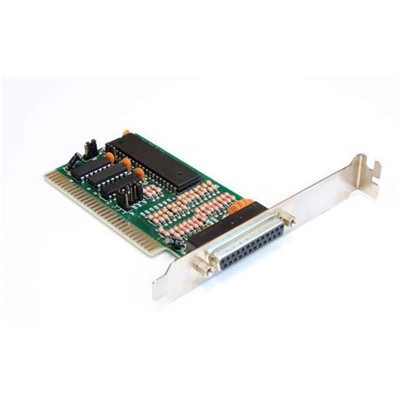
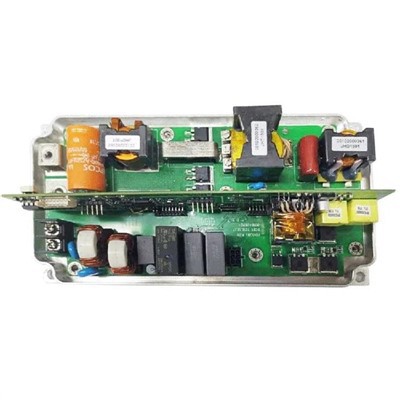
Rigid Printed Circuit Boards, known as Printed Circuit Board assemblies, are an integral and central part of electronic products. Due to the complexity and importance of PCBA, its manufacture and repair require a high degree of skill and expertise. Defective PCBA boards can lead to malfunctioning of electronic devices, which is why quality control and repair of PCBA boards have become particularly important in modern industry.
The PCBA board can be found inside almost all modern technology products, from smartphones to household appliances. It not only carries a variety of electronic components but is also responsible for the electrical connection between these components to achieve signal transmission and processing.
Advantages of PCB
1. It can have a high density. Over the decades, the high density of printed circuit boards can be developed with integrated circuit integration and mounting technology advances.
2. High reliability. Through a series of inspections, testing, and aging tests, we can ensure that the PCB is long-term (generally 20 years) and works reliably.
3. Designability. PCB's various performance (electrical, physical, chemical, mechanical, etc.) requirements can be standardized through the design of standardization, specification, etc. to achieve the design of printed circuit boards in a short time with high efficiency.
4. Producibility. The use of modern management, standardization, scale (volume), automation, and other production methods to ensure product quality consistency.
5. Testability. The establishment of more complete test methods, test standards, and a variety of test equipment and instruments to detect and identify PCB product qualification and service life.
6. can be assembled. PCB products not only facilitate the standardisation of various components for assembly but also automation and large-scale mass production. At the same time, PCB and various component assembly parts can also be assembled to form larger parts, systems, or the whole machine.
7. Maintainability. As PCB products and a variety of component assembly parts are standardized for design and large-scale production, these parts are also standardized. Therefore, once the system fails, it can be quickly, easily, and flexibly replaced and quickly resume service system work. Of course, more examples can be given. Such as making the system miniaturized, lightweight, high-speed signal transmission, and so on.
PCB Manufacturing Design Steps
Layout design
Special components in PCB design refer to key components in high-frequency modules, core components in circuits, sensitive components, high-voltage components, high-heat components, and some shaped components. The layout of these special components must meet the requirements of the circuit function and production needs. Improper placement can lead to compatibility and signal integrity issues, which can lead to PCB design failures.
When placing special components in a design, the size of the PCB should be considered first. If the PCB size is too large, the printed circuit lines will be longer, impedance will increase, interference immunity will decrease, and cost will increase. If it is too small, heat dissipation will be poor, and neighbouring circuits will be easily disturbed. After determining the size of the PCB, the placement of special parts should be determined. Finally, arrange all components according to the functional unit.
Placement order
Place components that fit closely to the structure, such as power sockets, indicator lights, switches, and connectors.
Place large components, heavy components, heating components, transformers, integrated circuits, and other special components.
Place small components.
Layout check
Check that the PCB dimensions match the processing dimensions required by the drawing.
Check that the component layout is balanced, neatly arranged, and all components are aligned.
Check for conflicts at all levels. For example, do the components, frames, and layers that need to be privately printed make sense.
Check that common components are easy to use, such as switches, plug-in boards, and components that need to be replaced frequently.
Check that the distance between thermal elements and heating elements is reasonable.
Check whether the heat dissipation is good.
Check whether the interference problem of the circuit needs to be considered.
Common PCBA defective board problems
1. Solder joint problem: Rigid Printed Circuit Boards on the solder joints connect circuit components and circuit boards; if the solder joints are bad, it may lead to electronic products not working properly. The reason for poor solder joints may be that welding temperature, time, or pressure is not enough; it may also be poor quality materials or a poor process.
2. Problems with electronic components: The electronic components on the PCBA board include resistors, capacitors, transistors, etc. These components may lead to a bad PCBA board due to quality problems or improper installation. For example, the pins of the electronic components may not be properly soldered to the PCBA board, or the components may have been damaged.
3. Short Circuit Problems: A short circuit is an unintended connection between two or more circuits on a PCBA board, usually due to an error in the board's design or manufacturing process. Short circuits may cause electronic devices to not work properly or even damage the device.
4. Board Damage: There may be physical damage on the board, such as cracks or breaks. This damage can be caused by errors in manufacturing, accidents during shipping or use, etc.
PCBA defective board repair method
 1. Soldering repair: For poorly soldered PCBA boards, the most common method is to re-solder the repair. First, you need to use a microscope or magnifying glass to check the condition of the solder joints, If you find that the solder joints are warped, oxidized, lacking tin, or have other problems, then you need to re-solder. During the soldering process, parameters such as temperature, time, and pressure need to be controlled to ensure good soldering quality.
2. Repair short-circuit: If the PCBA board is found to have short-circuit problems, you need to repair it. First of all, we need to determine the location of the short circuit and then use delicate tools (such as scissors or pins) to shorten the pad or pin separation and clean up the residue of the short circuit. Then reconnect or re-solder the pads or pins to ensure that there is no conductive material between them. Finally, perform the necessary tests to ensure that the problem has been completely resolved. It is important to note that great care should be taken when repairing a short circuit to avoid damaging other components or causing more serious problems. If you are unsure how to fix a short circuit, it is recommended that you seek the assistance of a professional technician.
3. Replacement of components: For damaged electronic components, it is necessary to remove them and replace them with new ones. When replacing the components, you need to make sure that you use components of the same specifications and models and pay attention to the correctness and reliability of the soldering. Then follow the steps below for replacement:
Melt the solder: Use a soldering iron to melt the solder to separate the component from the PCB.
Remove the original: When the solder has melted, use tweezers to remove the original from the PCB.
Clean the PCB board: Clean the PCB board with alcohol to ensure the fit of the replaced component to the PCB board.
Install the new components: Install the new components on the PCB board in the correct direction and position.
Soldering the new components: Use the soldering iron to solder the new components to the PCB board.
Cleaning and checking: Clean the residues on the PCB board and check the installation of new components and the soldering quality.
4. Debugging and Testing
After replacing the components, the PCBA board needs to be debugged and tested. Usually, test instruments can be used to check the electrical performance of the PCBA board. If there are still faults, further inspection and repair are required.
PCB boards, good or bad, will have an effect on PCBA processing
There is only one word difference between PCBA and PCB, but PCBA processing is a very complicated process. PCBA processing is based on the back-end processes of PCB board, such as solder paste printing, SPI inspection, SMT processing, reflow soldering, DIP post-soldering, wave soldering/selective wave soldering, PCBA first piece inspection, etc.. However, because all the processes behind are based on the PCB board, whether the PCB is good or bad determines the quality of the entire PCBA.
1.PCB dirty
PCB dirty board is mainly English flux high solid content, coating amount is too large, preheating temperature is too high or too low, or conveyor belt PCB clamp claw is too dirty, tin tank in the oxide and tin slag is too much and other reasons. The main solution is to choose the right flux, control the amount of flux coating, control the preheating temperature, check the cleaning effect of the automatic cleaning PCB clamp jaws and take measures, and ensure timely cleaning of the surface of the tin tank oxides and slag.
2. PCB-white residue
White residue is often referred to as white frost. Although it does not affect the surface insulation resistance, customers do not accept.
Solution: flux and then solvent cleaning; if you can not clean, may be due to flux aging, may be exposed to air absorption of water vapour, may also be due to high moisture content of the cleaning agent (solvent). If flux and cleaning agent do not match, you should ask the supplier to help solve the problem or replace the flux cleaning agent.
3. PCB deformation
PCB deformation is mainly due to PCB quality being too large or uneven layout of components. In the design of the PCB, try to distribute components evenly. In the middle of the large PCB, design a support belt (non-layout components area design width of 2 ~ 3 mm) or use the mass balance tool that will be PCB on the sparse components pressed in the welding process to achieve mass balance.
Group Profile
With 10 subsidiaries, ZHUHE Group is a comprehensive service provider of electronic technology and electronic products, providing professional OEM and ODM services for customers. The company's products and technologies are diversified, covering semiconductor devices, pulse motors, high-frequency transformers, inductors, and the core components of a variety of electronic products, such as PCBA (Printed Circuit Board Assembly) & FPCA (Flexible Printed Circuit Assembly). Assembly) & FPCA (Flexible Printed Circuit Assembly) and other products, focusing on aerospace, military, industrial control, data communications, automotive electronics, medical electronics, new energy technology, and AI intelligent technology, the main markets at home and abroad, the core customers throughout the United States, Japan, Germany and other domestic and foreign customers.

ZHUHE Group is positioned as an all-around EMS (Electronic Manufacturing Services) service provider, which can provide customers with board design, component procurement, processing and manufacturing, and BGA, CSP, POP, and other complex packaging device repair. Our products are designed and processed in a green way. The company has standardized management and insists on providing customers with high-quality products and services.

The company's R&D as the core driving force, through its strong R&D strength, relies on stable, high-quality manufacturing capacity for customers to complete the design, procurement, manufacturing, and other real sense of the "one-stop" service, to build a complete PCBA ecological chain, and ultimately to achieve the company's overall product competitive advantage.
Q: What are the types of Rigid Printed Circuit Board components?
A: There are two types of printed circuit board assemblies: SMD type and plug-in type. SMD components are directly glued to the printed circuit board, while plug-in components are inserted into sockets on the printed circuit board.
Q: How do you ensure the quality of PCBA?
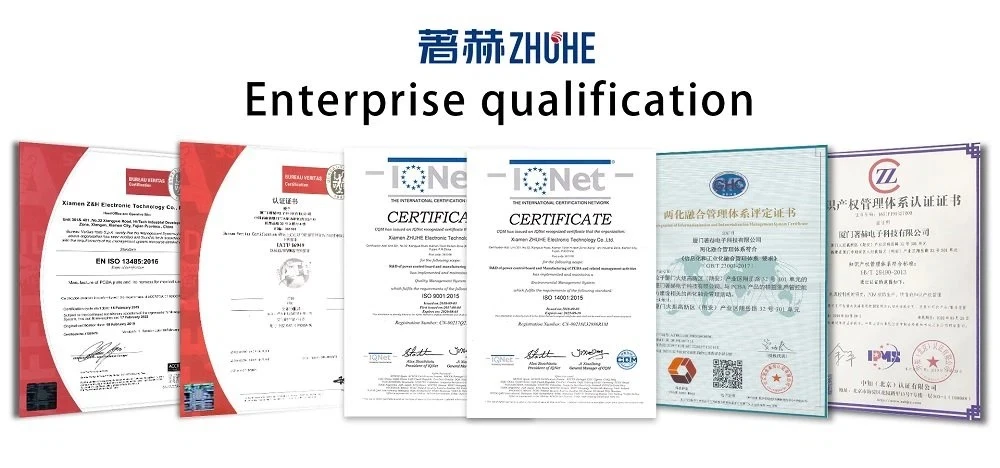
A: The quality control of PCBA is very important, and is related to the reliability and stability of the whole electronic product. PCBA manufacturers need to establish a sound quality management system, pass ISO 9001 quality certification, and strictly control every link in the manufacturing process.
Q: What are the PCBA process requirements?
A: The PCBA process requirements are very strict, including soldering quality, component installation position, etc. At the same time, in the stage of component selection and procurement, manufacturers need to make reasonable combinations according to the actual situation to ensure the stability and performance of products.
Q: What problems should be paid attention to in the assembly of PCBA?
A: The assembly of PCBA needs to pay attention to anti-static, moisture-proof, dust-proof, anti-vibration, and other issues. In the assembly process, it is necessary to arrange reasonably according to the actual situation to avoid problems such as errors and missing installations of components.
Hot Tags: rigid printed circuit board, China rigid printed circuit board manufacturers, suppliers, factory, Advanced Circuits PCB, , 6C Transistor, , Large PCB Board