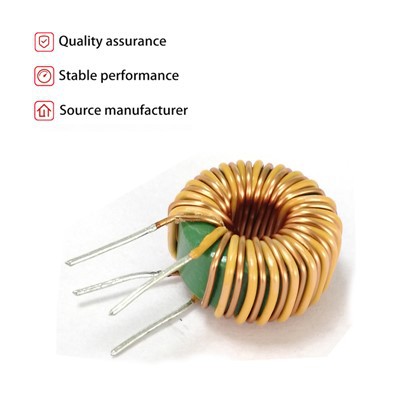
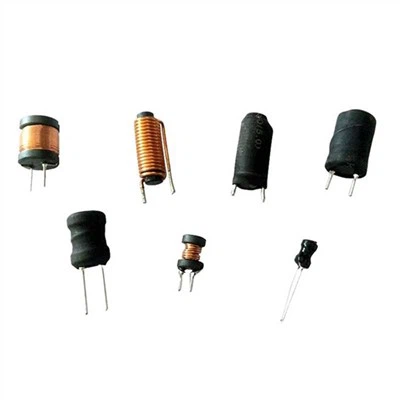
A Torrid Coil is a passive electronic component designed to store energy in the form of a magnetic field. It is usually made of a coil wound around a magnetic core material such as iron or ferrite. When current flows through the coil, it generates a magnetic field around it. The strength of this magnetic field is proportional to the current flowing through the coil.
Inductors are indispensable components in electronic circuits and play a vital role in a wide range of applications. From noise filtering to energy storage and signal processing, inductors perform a variety of functions that help improve the functionality and efficiency of electronic devices and systems.
What is the purpose of an inductor?
Inductors play a variety of important roles in circuits, and the following are their main functions:
1. AC Blocking/DC Passing: In DC circuits, inductors hardly impede the flow of current as if it were a short circuit, i.e., they "pass DC.". However, in AC circuits, the inductor produces reactance (XL = 2πfL), which impedes the flow of AC current and increases with frequency, i.e., "blocks AC.".
2. Filtering: Inductors and capacitors can be combined to form a variety of filters, such as low-pass filters, high-pass filters, etc., used to remove noise or specific frequency components in the circuit so that the output signal is more pure.
3. Oscillation: Combined with capacitors, it forms an LC oscillation circuit. Oscillation may occur when the intrinsic frequency of the circuit matches the frequency of an external signal and is used in signal generation and amplification circuits.
4. Tuning and selectivity: In radio and communications systems, the combination of inductors and capacitors can be used for selectivity, allowing signals of a specific frequency to pass while suppressing others, such as selecting different broadcast channels on a radio.
5. Energy storage: Inductors can store magnetic field energy. In circuits such as switching power supplies, inductors can store energy when the switch is on and release it when the switch is off, allowing voltage conversion and current smoothing.
6. Delay and bandstop: Inductors can introduce phase delays in signals for use in time-delay circuits or to filter out signals of a specific frequency (bandstop).
7. Choke: In power supply circuits, inductors act as choke coils that can prevent high-frequency noise from entering sensitive circuits or block ripple currents in DC circuits, and capacitors form filter circuits that provide smoother DC output.
8. Signal Selection and Separation: Common mode inductors and differential mode inductors are used to filter out common mode noise and differential mode noise, respectively, to improve signal purity.
9. Impedance matching: In circuits where different impedance matching is required between circuit sections, inductors can be used to adjust the impedance to optimise signal transmission efficiency.
How do I choose an inductor?
There are several key factors to consider when selecting an inductor Torrid Coil:
1. Current rating: The current rating of an inductor is the maximum current that can continuously pass through the inductor without causing it to overheat. When selecting an inductor, make sure the rated current of the selected inductor is greater than or equal to the maximum operating current in the circuit.
2. Inductance Value: The inductance value (L, usually in Henry [H], milliHenry [mH], or microHenry [μH]) is determined according to the specific requirements of the circuit. For example, in filter circuits, the inductance value affects the frequency characteristics of the filter; in oscillating circuits, it is related to the oscillation frequency. Selecting the correct inductance value is critical to the function of the circuit.
3. Self-resonant frequency: For high-frequency applications such as RF filters, the self-resonant frequency (SRF) of an inductor is an important parameter. Ensure that the operating frequency of the selected inductor is lower than its self-resonant frequency to avoid performance degradation or instability.
4. DCR (DC Resistance): DC resistance affects inductor efficiency and heat generation, especially in high-current applications. A lower DCR reduces energy loss but usually means a higher cost.
5. Package size and shape: In practical applications, space constraints are also important. Select the appropriate package size and shape (e.g., vertical, horizontal, shielded, or unshielded) to meet PCB layout requirements.
6. Cost: Different types of inductors (e.g., iron core, air core, ferrite core, etc.) and manufacturing processes affect cost. Select an inductor that meets performance requirements and provides a cost-effective solution.
7. Operating temperature range: Ensure that the operating temperature range of the inductor meets the requirements of the application environment, especially in high-temperature or highly variable-temperature environments.
8. Stability: For applications requiring high stability (e.g., precision measuring instruments), select inductors with low temperature coefficients and low aging rates.
Inductor selection is a comprehensive process that requires consideration of specific application scenarios, circuit design requirements, and cost budgets. Simulation software may also be required during the initial design phase to verify the impact of inductor parameters on circuit performance.
What types of inductors are there?
Inductors are categorised in a variety of ways and can be classified into many types based on different criteria. The following are some of the main ways in which inductors are categorised:
1. Based on core characteristics:
- Empty core coils: no magnetic core, suitable for high-frequency applications.
- Ferrite Core Coils: Use ferrite as the core, suitable for medium- to high-frequency applications.
- Iron Core Coil: Uses ferrous material as the core, suitable for low-frequency and power applications.
- Copper-ccore coils: Less common, used for special applications.
2. Based on the winding structure:
- single-Single layer flat-wound air-core inductor coils
- Layer-wound Air Core Coils
- Multilayer Air Core Coils
- Toroidal Coils
- Wirewound: In the traditional structure, coils are wound on the core.
- Stacked Type: Stacked from multiple layers of sheet metal, suitable for surface mounting.
- Braided and Film Inductors: Suitable for specific high-frequency or miniaturisation requirements.
3. Based on operating frequency:
- High-frequency inductors are used for RF and high-frequency signal processing.
- Medium Frequency Inductors: Used in medium-frequency range circuits.
- Low-frequency inductors are used for power filtering and low-frequency signal processing.
4. According to the structure characteristics:
- Core Coils
- Variable inductors: Inductance can be adjusted as required.
- Color-ccoded inductors: Inductance values identified by colour codes.
- Coreless Coils: Suitable for High-Frequency frequency applications.
5. Based on mounting form:
- Vertical Inductors, Horizontal Inductors, through-hole inductors, surface-mount Mount Inductors, etc. Adapt to different PCB designs.
6. Based on usage:
- oscillating inductors, tuning inductors, deflection yoke coils, choke coils, filtering inductors, isolation inductors, compensation inductors, and so on.
7. Based on package form:
- Standard inductors, toroidal inductors, epoxy resin inductors, surface mount inductors, and so on.
8. Based on whether the inductance is adjustable or not:
- Fixed Inductors: Inductance cannot be changed after manufacturing.
- Adjustable Inductors: Inductance can be changed by mechanical adjustment.
9. Based on the coupling method:
- Self-Inductance Coils: Voltage is induced within itself by a change in current.
- Mutual Induction Coils (Transformers): A change in current in one coil causes a change in voltage or current in the other coil.
Seven ways to improve your Q
Quality factor Q is an important parameter reflecting the quality of the coil; improving the Q value of the coil can be said to be one of the key points to pay attention to the winding coil. So, to improve the Q value of the winding coil, use the following specific methods:
(1) According to the operating frequency, select the wire of the coil.
Work in the low-frequency inductor coil generally uses enamelled wire and other insulated wire winding. operating frequency is higher than tens of thousands of hertz but lower than 2 MHz. The use of multi-stranded insulated wire winding coil can effectively increase the surface area of the conductor, thereby overcoming the effects of the skin effect, so that the Q value of the same cross-sectional area than the same single wire winding  coil is 30%–50% higher. In circuits with frequency higher than 2MHz, the inductor coil should be wound with a single-thick wire; the diameter of the wire is generally 0.3–1.5 mm. between the winding of the inductor coil and the commonly used silver-plated copper wire winding to increase the conductivity of the wire surface. This is not suitable for multi-stranded wire winding because multi-stranded insulated wire at high frequency and coil insulation medium will cause additional loss; the effect is not as good as a single wire.
(2) Selection of high-quality coil skeleton to reduce dielectric loss
In higher-frequency occasions, such as short-wave band, because of the ordinary coil skeleton, its dielectric loss increased significantly; therefore, should be selected with high-frequency dielectric materials, such as high-frequency porcelain, PTFE, polystyrene, etc. as a skeleton and the use of interwinding winding method.
(3) choosing a reasonable coil size can reduce the loss of a certain outer diameter of the single-layer coil (φ20mm–30mm), when the winding length L and the ratio of outer diameter D L / D = 0.7, the loss is the smallest; a certain outer diameter of the multi-layer coil L / D = 0.2–0.5, with t / D = 0.25–0.1, the loss is the smallest. With winding thickness t, winding length L and outer diameter D to meet the case of 3t + 2L = D, the loss is also the smallest. The coil with shielding is best when L/D = 0.8–1.2.
(4) Selection of a reasonable diameter of the shield
Shielding will increase the loss of the coil so that the Q value is reduced, so the size of the shield should not be too small. However, if the size of the shield is too large, it will increase the volume, and thus the diameter size of the reasonable shield should be selected.
When the shield diameter Ds and coil diameter D ratio meet the following values, that is, Ds / D = 1.6–2.5, Q value is reduced by no more than 10%.
(5) The use of magnetic cores can significantly reduce the number of coils.
The use of magnetic cores in the coil reduces the number of turns of the coil, which not only reduces the resistance value of the coil and is favourable to the improvement of Q value but also reduces the volume of the coil.
(6) The coil diameter is appropriately selected to be larger, which is conducive to reducing the loss in the possible conditions. When the coil diameter is selected larger, the volume increases a bit, which is conducive to reducing the loss of the coil. General receiver, single-layer coil diameter of 12mm–30mm; multi-layer coils take 6mm–13mm, but from volume considerations, should not exceed the range of 20mm–25mm.
(7) Reduce the distribution capacitance of the winding coil.
As far as possible, using no skeleton winding coil or winding in the convex rib type skeleton coil can reduce the distribution capacitance of 15-20%; segmented winding method can reduce the distribution capacitance of multi-layer coils of 1/3 ~ l / 2. For multi-layer coils, the smaller the diameter D, the smaller the length of the winding L, or the greater the thickness of the winding t, the smaller the distribution capacitance. It should be noted that after diffuse impregnation, sealing and coating of the coil, its distributed capacitance will increase by 20%–30%.
In short, the winding of the coil, always to improve the Q value and reduce losses, is the focus of consideration.
Group Profile
Zhuhe Group has 10 subsidiaries, is a comprehensive service provider of electronic technology and electronic products, can provide customers with professional OEM / ODM services, the company's products and technologies show diversified, covering semiconductor devices, pulse motors, high-frequency transformers, inductors, and a variety of electronic products, the core components of PCBA (Printed Circuit Board Assembly) & FPCA (Flexible Printed Circuit Assembly) and other products, focusing on aerospace, military, industrial control, data communications, automotive electronics, medical electronics, new energy technology and AI smart technology. Assembly) & FPCA (Flexible Printed Circuit Assembly) and other products, focusing on aerospace, military, industrial control, data communications, automotive electronics, medical electronics, new energy technology and AI intelligent technology, the main markets at home and abroad, the core customers throughout: the United States, Japan, Germany and other domestic and foreign customers. Our main markets are at home and abroad.

Over the years Zhuhe has been providing customers with one-stop quality services from PCB manufacturing to component sourcing and assembly, from PCB board and assembly manufacturers for a variety of advanced and state-of-the-art circuits at affordable prices, customer trust and support, is our strongest motivation. Suitable for many applications and quick turnaround assembly services.

Our company adheres to the "speciality quality, prominent future" has been in the product development and manufacturing to maintain a very good competitive advantage. There is no peak in technology, there is no end to the research, we are based on the concept of continuous improvement and sustainable management, and constantly improve the innovative content of products and product quality.

Q: How to choose the right inductance coil?
A: The key to deciding an inductor coil is to choose the appropriate specifications and materials according to the parameters and needs of the circuit. Specifically, the parameters of the inductor coil, such as resistance, inductance, frequency, operating temperature, rated voltage, etc., should be considered to meet the needs of the circuit. In addition, when selecting materials, special attention should be paid to the voltage and heat resistance of the inductor coil.
Q: What is the working principle of the inductance coil?
A: The working principle of the inductance coil is based on the interaction of the magnetic field and the current. When an electric current is passed through the coil, a magnetic field is created, and the magnetic field around the coil affects the current in the coil. This action allows the inductor coil to store and release electromagnetic energy, as well as filter and isolate DC and AC signals in the circuit.
Q: What are the characteristics of inductance Torrid Coils?
A: The characteristic of the inductor coil is that it has resistance to resistance and also has resistance to inductance. Inductor coils are capable of attenuating high-frequency signals and isolating DC signals. The inductor coil is also capable of converting the stored electromagnetic energy so that it can be powered to other components.
Hot Tags: toroidal choke coil, China toroidal choke coil manufacturers, suppliers, factory, PCB Test Board, Transformer Switching Power Supply, Electric Generator Stator, Fpc Flexible Printed Circuit, Massager, Portable Outdoor Power Station
Hot Tags: torrid coil, China torrid coil manufacturers, suppliers, factory, Filter Coil Inductor, , Electric Generator Stator, ,