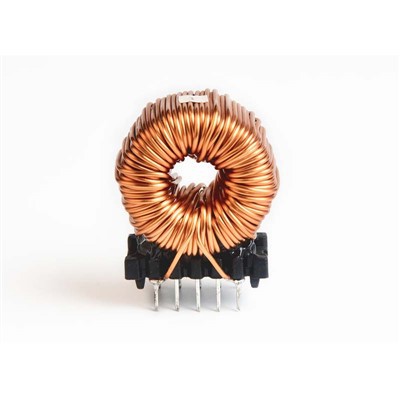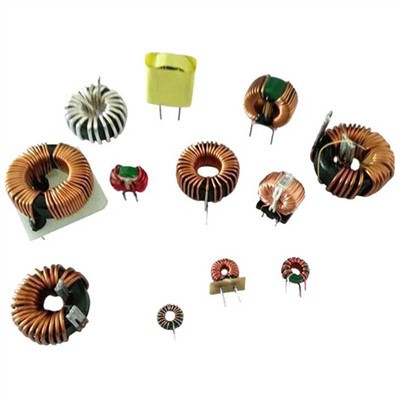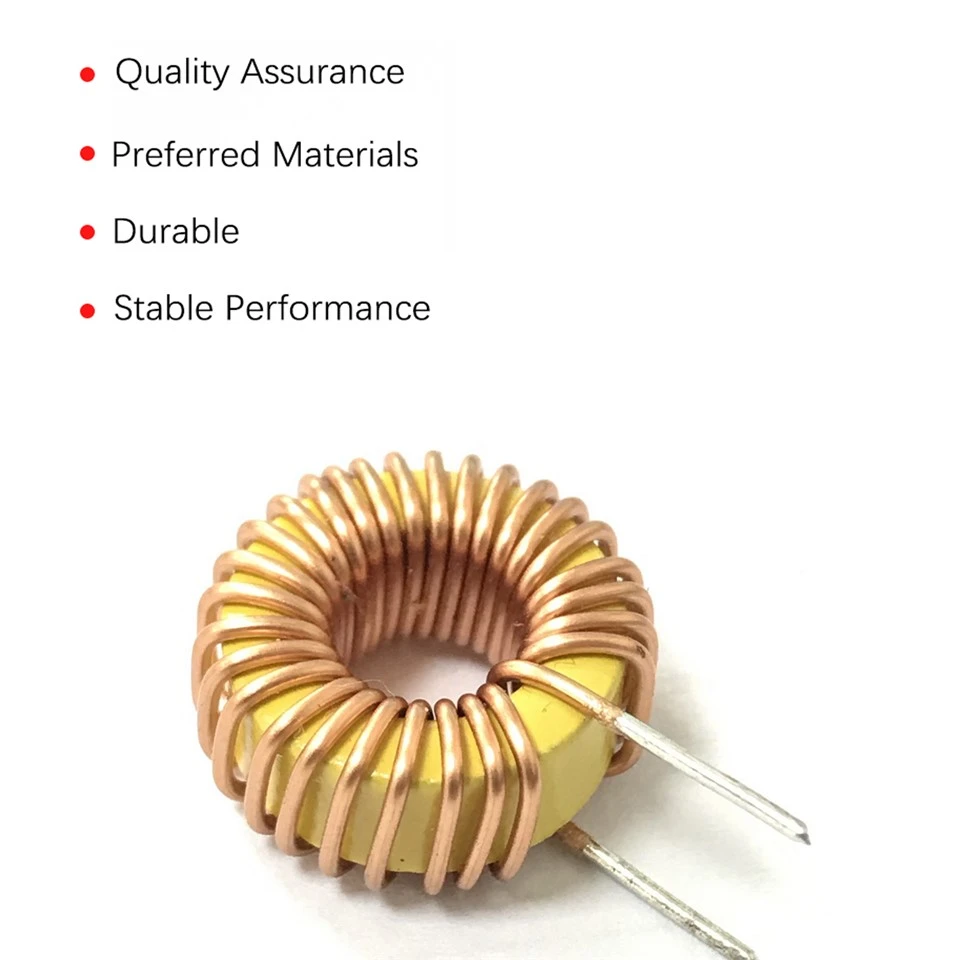


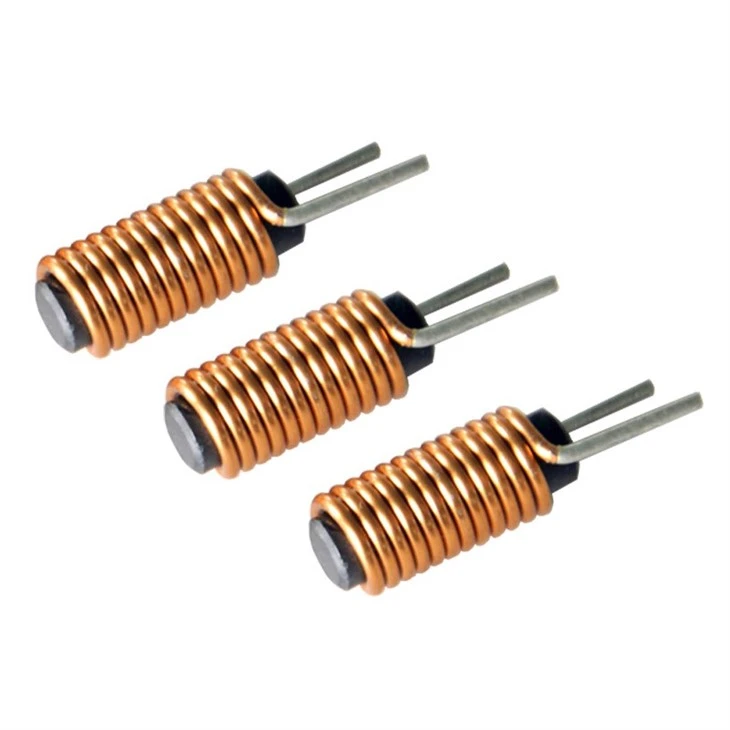
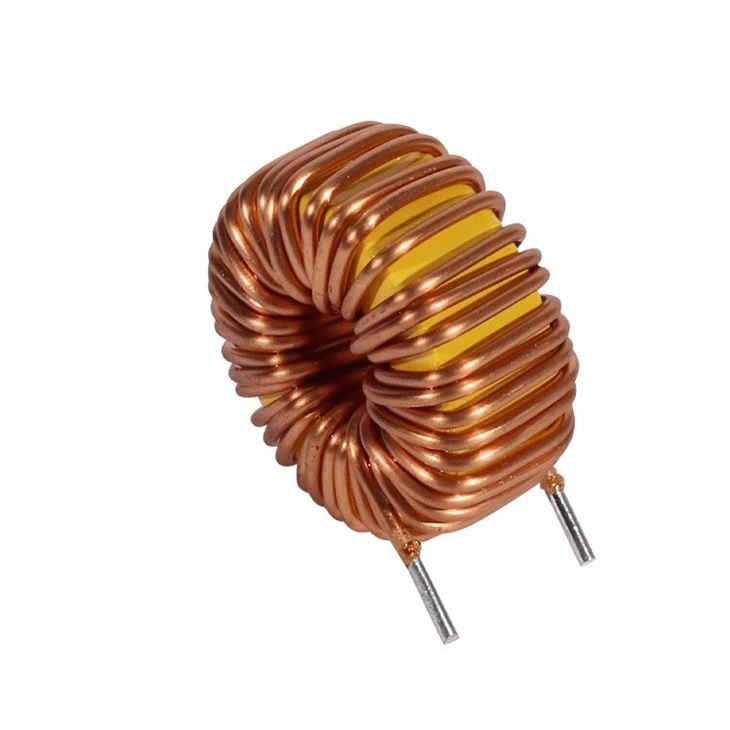

Only a part of the ferrite core coils, such as chokes, low-frequency chokes, oscillation coils, and LG fixed inductance coils, are produced according to the specified standards, and the vast majority of inductance coils are non-standard parts that are often customized according to the actual needs of customers. So, how do you wind the inductance coil, and what should be paid attention to when winding?
When an electric current flows through a wire, a certain electromagnetic field is generated around the wire. It is formed by winding it regularly around a coil. Let's talk about the winding method of the inductance coil:
1. Single-layer winding method: that is, the wire turns of the inductance coil are wound on the outer surface of the insulated pipe in a single-layer way, and the single-layer winding method is divided into indirect winding and tight winding. Indirect winding is generally used in some high-frequency resonant circuits because the winding method in this way can reduce the capacitance of the high-frequency resonant line pattern and at the same time stabilize some of its characteristics. The basis for the tight winding method is some coils with a relatively small range of resonant coils.
2. Multi-layer winding method: the inductance of the coil is relatively large, the winding method of the coil is a multi-layer winding method, the multi-layer winding method includes two types of dense winding and hive winding, the dense winding method is arranged relatively closely, and the distribution of layer by layer is required. The capacitance generated by the coil it winds is relatively large, and the way the hive winding is arranged at a certain angle, its arrangement is not very flat, but compared with the tight winding method, its capacitance is relatively small. Some high-voltage resonant circuits, when winding the inductor coil, need to meet the current value and withstand the voltage between the coils. We also need to consider the heat of the coil when winding the inductor coil.
Precautions for coil use and installation:
(1) The installation position of the coil should meet the design requirements
The assembly position of the coil and the relative position of other components should conform to the design regulations; otherwise, the normal operation of the whole machine will be affected. For example, the position of the high-frequency choke coil and the magnetic antenna in a simple semiconductor radio should be appropriately arranged. The antenna coil and the oscillating coil should be perpendicular to each other,  which avoids the effects of mutual coupling.
(2) Before the coil is installed, it is necessary to conduct a visual inspection
Before use, check whether the structure of the coil is firm, whether the wire turn is loose and loose, whether the lead contact is loose, whether the core rotation is flexible, whether there is a sliding buckle, etc. After these aspects are checked, the installation is carried out.
(3) If the coil needs to be fine-tuned during use, the fine-tuning method should be considered
Some coils need to be fine-tuned in the process of use, and it is very inconvenient to change the number of coils, so the method of fine-tuning should be taken into account when selecting. For example, a single-layer coil can be used to remove the number of trapped coils near the end; that is, 3~4 turns are wound around one end of the coil in advance, and the inductance can be changed by moving its position during fine-tuning. This method of regulation has been proven to be able to fine-tune the inductance by ± 2%–±3%. Coils used in short-wave and ultra-short-wave circuits often set aside half a turn as a fine-tuning, and the half-turn is removed or turned to change the inductance to achieve fine-tuning. The fine-tuning of multi-layer segmented coils can be achieved by moving the relative distance of one segment, and the number of turns of movable segments should be 20%–30% of the total number of turns. Practice has proven that this fine-tuning range can reach 10%–15%. For coils with a magnetic core, the amount of coil inductance can be fine-tuned by adjusting the position of the core in the coil tube.
(4) When using the coil, pay attention to maintaining the inductance of the original coil
When the coil is in use, do not change the shape of the coil casually. Size and the distance between the coils, otherwise it will affect the original inductance of the coil. Especially the higher the frequency, i.e., the lower the number of coils. Therefore, the high-frequency coils currently used in TVs are generally sealed and fixed with high-frequency wax or other dielectric materials. In addition, it should be noted that during maintenance, do not change or adjust the position of the original coil at will, so as not to cause detuning failure.
(5) The installation of the adjustable coil should be easy to adjust
The adjustable coil should be installed in an easily adjustable position on the machine so that the inductance of the coil can be adjusted to achieve optimal working conditions.
Group Profile
ZHUHE is an enterprise specializing in the production of electronic products and electronic plates, and is committed to providing customers with high-quality products and services. With years of industry experience and technical strength, we have advanced production equipment and quality management system to ensure the quality of our products and the reliability of our delivery time.

Our products cover a wide range of fields, including smart home, smart life, e-commerce, etc. ZHUHE constantly improves the quality of our products and service level. We have established long-term and stable cooperative relationships with famous enterprises at home and abroad, and are trusted and supported by our customers.
With years of experience and technical knowledge, our team is committed to developing smarter, more efficient and safer products for a better customer experience.

At present, Zhuhe technology centre has more than 50 software and hardware development engineers, with an average of more than 10 years of design experience and more than 86 national patents. It has formed core technology competitiveness and supported the enterprise innovation strategy.
We have a professional team: we have rich R & D / production experience in FPC/PCBA/IC/ new energy and other fields

Q: What is the working principle of the inductance coil?
A: The inductance coil is made of a metal coil, and when an electric current is passed through the coil, a magnetic field is generated. The strength of the magnetic field is directly proportional to the strength of the current in the coil, while the direction of the magnetic field is perpendicular to the direction of the current. When the current changes, the magnetic field also changes, creating an induced electromotive force. This is the basic principle of inductance. An inductor coil can control the voltage in a circuit by changing the current in the coil.
Q: In which fields are inductance coils used?
A: Inductance coils are widely used in various fields, such as electricity, electronics, communications, lighting, and automobiles. In power systems, inductance coils are used in devices such as transformers and electric motors. In electronic devices, inductance coils are used in circuit filters, voltage regulators, amplifiers, etc. In communication equipment, inductance coils are used to filter signals, adjust frequencies, and more. In automobiles, inductor coils are used in devices such as ignition, charging, etc.
Q: What are the advantages and disadvantages of inductance coils?
A: The advantages of inductance coil are small size, high power, small loss, high precision and high reliability. It can stabilize voltage, reduce noise, limit current, compensate, etc., and has strong practical value. However, inductance coils also have some disadvantages, such as poor frequency response, self-inductance affecting the circuit, etc. But these problems can be solved by reasonable circuit design and choosing the right inductor.
Hot Tags: ferrite core coils, China ferrite core coils manufacturers, suppliers, factory, Electric Generator Stator, , Filter Coil Inductor, ,