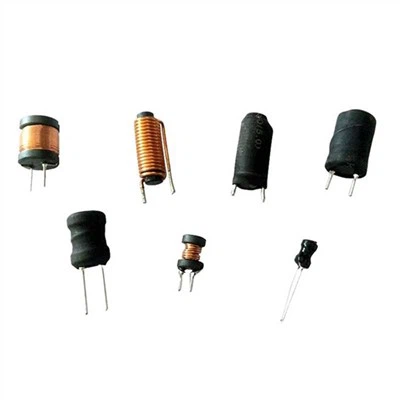
A Choke Coil is a characteristic of a circuit element that varies in opposition to the current flowing through it. It is a measure of the ability of a circuit element, such as a coil or conductor, to generate an electric potential (EMF) in response to changes in the current flowing through it. Inductance is an important characteristic in many electrical and electronic applications, including transformers, motors, generators, and filters. It is also used in the design of resonant circuits, which are used in radio and communication systems.
What are the factors that affect the inductance of a circuit element?
The inductance of a circuit element (such as a coil or conductor) is affected by some factors, including:
- Number of turns in the coil: Increasing the number of turns in a coil increases its inductance while decreasing the number of turns decreases its inductance.
- Size and shape of the coil: the inductance of a coil increases with its size and the area of the coil cross-section. The shape of the coil also affects its inductance, with certain shapes of coils (e.g. solenoids) having higher inductance than others.
- Type of core material: The material used for the core of an inductor affects its inductance. Materials with high permeability, such as iron or ferrite, can increase the inductance of a coil.
- Presence of nearby conductors: The inductance of a coil is affected by the presence of nearby conductors. The presence of nearby conductors induces a magnetic field, which affects the magnetic field of the coil, and thus the inductance of the coil.
- Frequency of current: The inductance of a coil increases with the frequency of the current flowing through it. At higher frequencies, the changing magnetic field induces more electromotive force in the coil, resulting in a higher inductance.
What are the applications of inductors?
Inductors have a wide range of applications in electronics, some of which include:
- Power Supplies: Inductors are used in power supplies to eliminate voltage fluctuations, improve efficiency, and reduce noise.
- Filters: Inductors are used in combination with capacitors to form passive filters that can be used to remove unwanted frequencies from a signal.
- Oscillators: Inductors are used in electronic oscillators to create resonant circuits that can produce stable frequencies.
- Transformers: Inductors are used as primary or secondary windings in transformers to step up or step down voltage levels.
- Motors: Inductors are used in electric motors to generate magnetic fields that produce torque and rotational motion.
- Radio Frequency (RF) Circuits: Inductors are commonly used in RF circuits to block or pass specific frequencies, create resonant circuits, and match impedances between circuits.
- Sensors: Inductors are used as sensing elements in proximity sensors, inductive sensors, and metal detectors.
- Lighting: Inductors are used in fluorescent lamp ballasts to provide the necessary voltage and current to power fluorescent tubes.
- Audio Circuits: Inductors are used in audio circuits as part of tone controls and inductor-based filters.
- Communication Systems: Inductors are used in communication systems for impedance matching and to create inductively coupled circuits for wireless power transmission, RFID, and other applications.
What is the difference between inductance and resistance?
|
Topic |
Resistance |
Inductance |
Examples of Circuits |
|
Definition |
Opposition to the current flow |
Opposition to changes in the current flow |
RC circuits |
|
Behavior in DC circuits |
Exhibits constant resistance value |
Offers no opposition to current flow |
Voltage dividers |
|
Behavior in AC circuits |
Varies with frequency (impedance) |
Opposition to changes in the current flow |
Inductive loads in power supplies |
|
Effects on Electronic Circuits |
Generates heat and dissipates power |
Stores energy in the magnetic field |
Filters and signal conditioning circuits |
How do resistance and inductance affect the behavior of electronic circuits in different ways?
Resistance and inductance are both important characteristics of electronic circuits, and they affect their behavior in different ways.
Resistance is a measure of how well a circuit element resists the flow of current and is measured in ohms. Resistance causes a voltage drop in the circuit and dissipates energy in the form of heat. The resistance of a circuit element is constant, independent of the frequency of the current flowing through it.
On the other hand, inductance is a measure of how well a circuit element resists changes in the current flowing through it and is measured in Henrys. Inductance causes the energy stored in the magnetic field to increase with the rate of change of the current, which can lead to voltage spikes and other transient behavior in the circuit. The inductance of a circuit element depends on the frequency of the current flowing through it and increases with frequency.
The main difference between resistance and inductance in electronic circuits is:
- Energy Dissipation: Resistance dissipates energy in the form of heat, while inductance stores energy in a magnetic field. This means that a resistive element in a circuit consumes power, while an inductive element can store energy and release it later.
- FREQUENCY DEPENDENCE: Resistance is frequency-independent while inductance is highly frequency-dependent. This means that the behavior of the resistive element in a circuit remains constant regardless of the frequency of the current, while the behavior of the inductive element varies with frequency.
- Voltage and Current Relationship: Resistance causes a linear relationship between voltage and current, while inductance causes a non-linear relationship between voltage and current due to the effects of magnetic field changes.
What is the relationship between inductance and capacitance and how does it relate to resistance?
 Inductance and capacitance are related through their ability to store energy in a circuit. An inductor stores energy in a magnetic field, while a capacitor stores energy in an electric field. When two components oscillate, the energy stored in the inductor and capacitor can be exchanged back and forth between the two components, creating a resonant circuit.
A resonant circuit is a circuit that oscillates at a specific frequency (called the resonant frequency) and has a high impedance at that frequency. The impedance of the circuit at the resonant frequency is determined by the values of the inductance and capacitance and is usually higher than the impedance of the circuit at other frequencies.
The resistance of the circuit affects the behavior of the resonant circuit by damping the oscillations. A resonant circuit with a high resistance will have a greater damping response, while a resonant circuit with a low resistance will have a greater oscillatory response.
The relationship between inductance, capacitance, and resistance can be described by the concept of reactance. Reactance is a measure of the opposition of a circuit element to the flow of alternating current and is measured in ohms. Inductors and capacitors have opposite reactances: inductive reactance increases with frequency, while capacitive reactance decreases with frequency.
The total impedance of a circuit containing inductors and capacitors is given by the impedance triangle, which is a vector diagram showing the total impedance as the hypotenuse of a right triangle, with the inductive and capacitive reactances as the other sides. The angle between the inductive and capacitive reactances is called the phase angle and represents the phase difference between the current and voltage in the circuit.
What are some common uses of resistors and inductors in electronic devices and systems?
Resistance and A Choke Coil are two important characteristics that are widely used in various electronic devices and systems. Here are some common uses of resistors and inductors in electronic products:
Resistors are used in electronic circuits to control current and limit the voltage between components. They are used to set the gain of amplifiers, and bias transistors, and provide voltage drops in voltage divider circuits. They are also used as pull-up or pull-down resistors in digital circuits to prevent floating inputs and improve circuit stability.
Inductors are used in electronic circuits to store and release energy in the form of magnetic fields. They are used in filters to block certain frequencies, in oscillators to generate specific frequencies, and in transformers to transfer energy between circuits. They are also used in switching regulators to smooth the output voltage and in power supplies to filter out ripple voltage.
In electronics, resistive and inductive components are often combined to form circuits with unique characteristics. For example, an RC circuit combines resistors and capacitors to create a circuit that filters out high frequencies. Similarly, an RL circuit combines a resistor and an inductor to create a circuit that filters out low frequencies.
Resistors and inductors are also used in electronic sensors, such as temperature sensors and strain gauges, to measure changes in resistance or inductance in response to changes in temperature or strain.
7 Key Differences Between Transformers and Inductors
In general, the shape, wire diameter, Q, inductance, and core are all the same. They are also theoretically interchangeable because they are essentially the same.
Transformers and inductors both have coil windings, but they have different structures and functions. Transformers must have at least one tap or two windings, and using different taps or windings to convert AC circuits also affects the inductance. An inductor is a double-ended device with only one tap for storing energy and converting phase. Wireless signals are converted to current signals by coils wound in space, also known as induction coils.
The main function of a transformer is to convert high-voltage alternating current to low-voltage alternating current. The main function of an inductor is to isolate and filter AC signals or to form a resonant circuit with capacitors and resistors.
The voltages generated are as follows: 1) the inductive reactance of the inductor resonates with the alternating current, but does not affect the direct current; 2) the transformer generates a voltage by mutual inductance through its inductance on the secondary side.
Differences in the method of connection: 1) transformer in the circuit in parallel with the AC power supply; 2) although the inductance has a blocking effect on the AC, but does not completely block the current through the circuit.
There are differences in the effect of AC: 1) Since AC is limited by inductive reactance, inductance is the limiting factor; 2) Transformers work as AC loads, they convert energy rather than transfer it.
The main applications of transformers are LED lighting, converter technology for commercial and medical purposes, high voltage, and electrostatic spraying. Inductors are widely used in smartphones, automobiles, computers, televisions, and smartwatches.
Group Profile
ZHUHE Group has 10 subsidiaries, is a comprehensive service provider of electronic technology and electronic products, and can provide customers with professional OEM / ODM services, the company's products and technologies show a diversity of products, covering semiconductor devices, pulse motors, high-frequency transformers, inductors, and a variety of electronic products, the core components PCBA (Printed Circuit Board Assembly) & FPCA (Flexible Printed Circuit Assembly) and other products, specializing in aerospace, military, industrial control, data communications, automotive electronics, medical electronics, new energy technology, and AI smart technology. Assembly) & FPCA (Flexible Printed Circuit Assembly) products, focusing on aerospace, military, industrial control, data communications, automotive electronics, medical electronics, new energy technology, and AI intelligent technology, the main markets at home and abroad, the core customers throughout: the United States, Japan, Germany, and other domestic and foreign customers. Our core customers are in the United States, Japan, Germany, and other domestic and foreign customers.

The company takes R&D as the core driving force, through its strong R&D strength, relying on stable, high-quality manufacturing capacity, for customers to complete the design, procurement, manufacturing, and other real sense of the "one-stop" service, to build a complete PCBA ecological chain, and ultimately realize the company's overall product competitive advantage.

We always adhere to science and technology as the leader, market-oriented, technological innovation for the purpose of technological innovation and value enhancement for the mission. Together we are committed to the development of electronic technology and new energy industry and promote the application of green energy with high-quality products and perfect service.

Q: Why do I need an inductance coil?
A: Due to the special properties of the inductance coil, it can effectively control and filter the current and voltage in the circuit. The inductance coil can prevent the current from changing too quickly to ensure the stability of the circuit, and at the same time, it can also filter out the interference signals in the power supply, making the circuit more reliable.
Q: Is there a relationship between the impedance and frequency of A Choke Coil?
A: The impedance of the inductor coil is positively correlated with the frequency of the current inside it, and when the frequency increases, the impedance of the inductor coil also increases. This is because, at higher frequencies, the current in the coil does not change fast enough, resulting in the magnetic flux inside it not changing in time, hence the repulsion effect.
Q: What are the issues that need to be paid attention to when using inductance coils?
A: Firstly, it is necessary to ensure the quality of the inductor coil and the suitable application for use, because it is necessary to pay attention to its rated power, resistance, and inductance value in the process of using the inductance coil. Secondly, it is essential to maintain a good connection when using inductance coils, as their performance and effectiveness depend on the connection between the wires. Finally, pay attention to the load that the inductor coil is subjected to in daily use to avoid overloading and damaging the coil.
Hot Tags: a choke coil, China a choke coil manufacturers, suppliers, factory, Massager, Square Cabin Mobile Phone Sterilizer, 6C Transistor, Bipolar Junction Transistor Bjt, Electronic Transformer, Electric Generator Stator