


A high frequency step down transformer is a type of power element, and its main function is to convert medium-frequency or high-frequency electrical energy into a low-voltage or high-voltage transformer. In the electronics industry, high-frequency transformers are commonly used in circuits such as switching power supplies and inverters, as well as in high-frequency appliances such as high-power discharges, induction furnaces, and induction heating. High-frequency transformers have many advantages, such as high efficiency, small size, light weight, etc., so they are widely used.
The core component of a high-frequency transformer is the magnetic core. The material and shape of the core have a great influence on the performance of high-frequency transformers. Common core materials are ferrite, magnetic stainless steel, etc. There are also various core shapes, such as ring, EE, EI, U, RM, etc. Different core shapes are suitable for different circuits.
The maximum value of the switching frequency is limited by the thermal resistance of the switching power components (BJT, MOSFET, and IGBT) and the iron loss of the core material; in other words, everything is limited by the temperature that the material can bear.
The production process of high-frequency transformers
The manufacturing process of high-frequency transformers can be divided into multiple steps, such as design, material selection, processing, assembly, and testing.
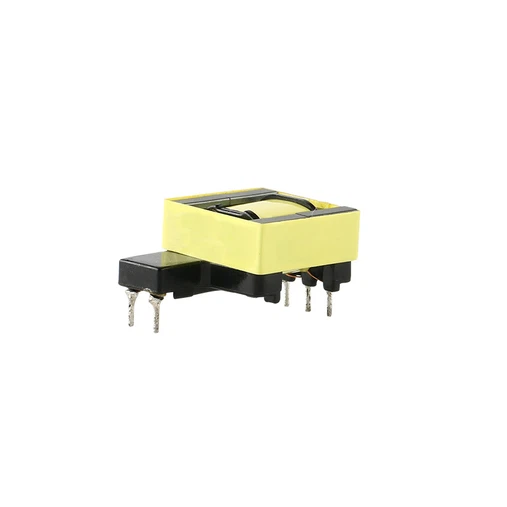
1. Design: Determine the electrical parameters and physical structure of the transformer according to the requirements, including input and output voltage, current capacity, winding structure, etc. During the design process, factors such as electrical performance, energy efficiency, volume, and mass need to be considered.
2. Material selection: select the right materials for making the core parts of high-frequency transformers, such as magnetic materials and insulating materials. Core materials should have high permeability and low magnetic losses to improve energy efficiency and performance.
3. Processing: According to the design requirements, the core materials are processed. First, the magnetic material is processed into the desired shape, such as cylindrical, E-type, I-type, etc. Then, the insulating material is processed according to the design requirements and used for wrapping around the group. Accuracy and quality should be ensured during the machining process.
4. Winding: The wire is wound on the magnetic material according to the design requirements to form a winding. The manufacturing process of windings involves the selection of wires, the treatment of insulation layers, the determination of the shape and number of layers of windings, etc. In the winding process, the tightness of the windings and the insulation between the wires should be ensured.
5. Assemble: Assemble the core part and winding, and connect the input and output terminals. The assembly process requires that the components are in the correct position, in good contact, and that they are well insulated and secured.
6. Testing: Perform performance tests on the assembled high-frequency transformers, including input and output voltage and current measurements, withstand voltage tests, load tests, etc. The test results should meet the design requirements and the relevant standards and specifications.
In short, the production of high-frequency transformers needs to go through multiple links of design, material selection, processing, assembly, and testing, and each link needs to strictly control the quality and accuracy to ensure the performance and reliability of the transformer. At the same time, relevant standards and specifications should be followed in the production process to ensure the safety and quality of the product.
There are two basic winding methods for high-frequency transformers

1. sequential winding method
For the general single output power supply, the transformer is divided into 3 windings: the primary winding Np, the secondary winding Ns, and the auxiliary power winding Nb, and the winding sequence is: Np--N--Nb.
This winding process is simple, easy to control the various parameters of the core, good consistency, low winding cost, suitable for mass production, but the leakage inductance is slightly larger, the coupling capacitance is small, and EMI is better, so it is suitable for small power occasions that are not sensitive to leakage inductance, and the general power is less than 30~40W in the power supply, which is generally practical This is the winding method.
2. Sandwich winding method
The winding method of the primary clamp secondary (also called the primary average winding method) has the advantage of a large amount, which is conducive to the coupling of the primary stage, reduces the leakage inductance, and is also conducive to the flatness of the winding. The last advantage is that the voltage change of the power supply winding is less affected by the load of the secondary stage and is more stable. The disadvantage is that the winding coupling capacitance is relatively large because the primary stage has two contact surfaces, so the EMI is more difficult.
When the output is low-voltage and high-current, this winding method is mostly used, which has the advantage of effectively reducing the temperature rise caused by copper loss and reducing the high-frequency interference of the primary coupling to the transformer core.
Group Profile
Zhuhe is a collection of research and development, production, and sales as one of the high-tech industrial groups. We are mainly engaged in the research and development and manufacturing of PCBA (printed circuit board components, including FPC and soft and hard board components, which are the core components of electronic products). In recent years, through the integration and layout of the industrial chain, its products and technologies have been diversified, including semiconductor devices, pulse motors, high-frequency transformer inductors, etc., mainly focusing on high-speed data transmission and communication, automotive electronics, medical electronics, industrial control products, energy saving power technology and other fields.

Our team management is very strict and focuses on the career development and training of our employees. We encourage our employees to self-improve and innovate, contributing to the development of the company while they develop themselves.
Our company has a wide range of influence and strong partners, our products are distributed in many fields at home and abroad, providing excellent solutions for our customers, and have been praised by new and old customers. We have established long-term partnerships with several well-known enterprises, and work together to promote the development of the electronics industry.

We can provide customers with single and double-sided boards, high multi-layer panels, rigid-flex composite boards, special process soft boards, etc.; We can also customize the products required by customers according to the drawings or samples provided by customers. We strictly control the quality of products at every step in the manufacturing process and provide leading technical support. Before cooperating, we will have a professional technical team to answer for you. In the process of cooperation, we have a professional technical team to serve you. After cooperation, we have dedicated technicians to serve you one-on-one.

Q: What is the working principle of a high-frequency transformer?
A: The working principle of a high-frequency transformer is essentially similar to that of a low-frequency transformer. However, they work with a high frequency of current, which reduces the size and volume of the transformer.
Q: What are the advantages of high-frequency transformers?
A: The biggest advantage of high-frequency transformers is that they can have high energy efficiency in a small size. In addition, they can provide isolated and/or coupled signals or energy, so they are widely used in a variety of fields.
Q: What are the applications of high frequency step down transformer?
A: High-frequency transformers are widely used in communications, computers, medical, power systems and other industries. They are commonly used for power factor correction, boosting, and stepping.
Hot Tags: high frequency step down transformer, China high frequency step down transformer manufacturers, suppliers, factory, Electronic Transformer,


