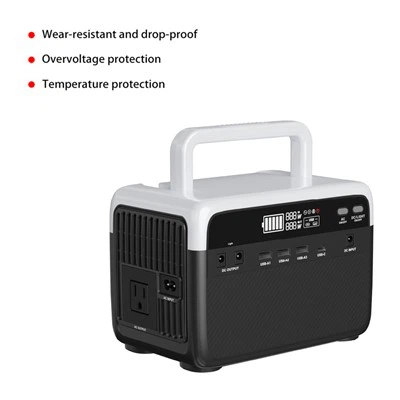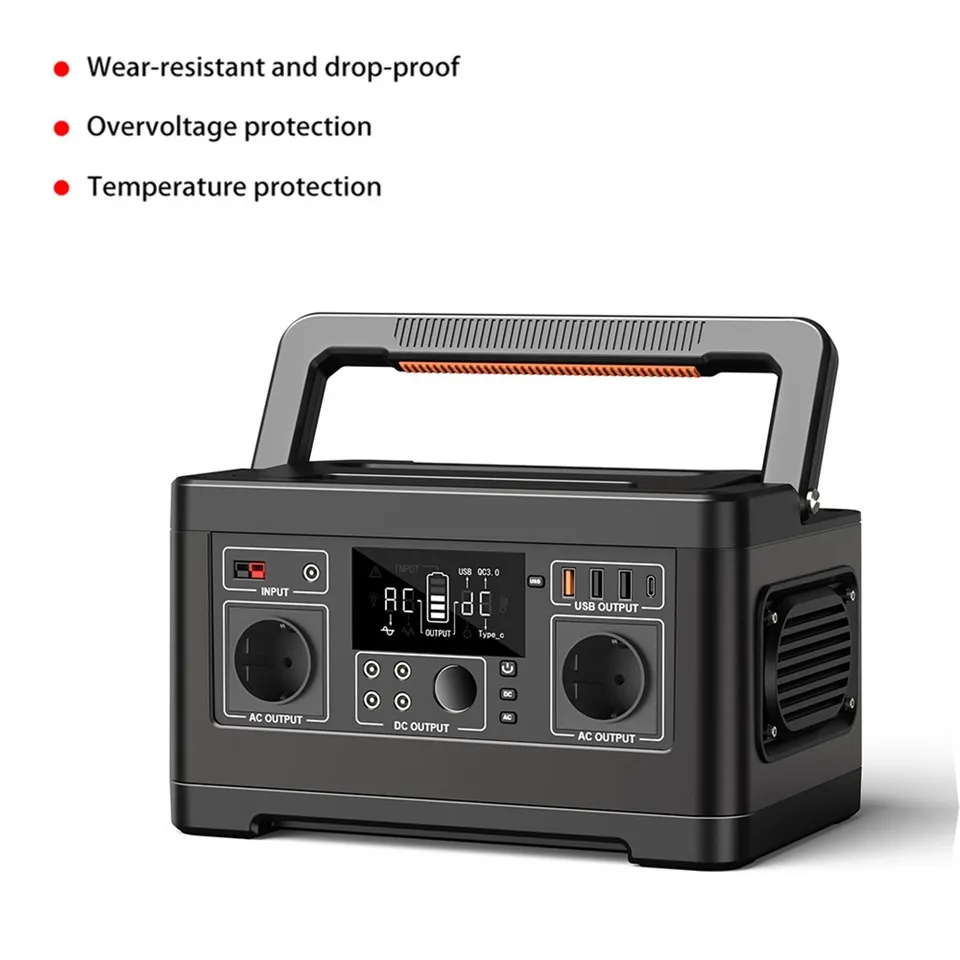


Outdoor Backup Power Supply, also known as portable generators or battery packs, are compact devices designed to provide electricity when a traditional power source is not available. They store electrical energy that you can use to power a range of devices from laptops and cell phones to small appliances, ensuring that you can work efficiently and uninterruptedly.
These devices work very similarly to regular rechargeable batteries but on a much larger scale. Inside each portable power station is a large battery that is charged by a power source, such as a wall outlet or solar panel. Once charged, this battery can be used to power your devices. Depending on the model and capacity, portable power stations can run devices such as laptops for hours.
What can you use a portable power station to power?
Portable power stations are versatile and can power a wide range of equipment and devices to ensure your outdoor activities run smoothly. Let's take a look at some of the common pieces of equipment that you may need to power during an outdoor event and their approximate power requirements:
1. Outdoor Lighting: Depending on the size and type of event, you may need different lighting equipment such as fairy lights, spotlights, or lamps. Most standard outdoor lights consume 5-100 watts per hour.
2. Sound system: If music or announcements are part of your event, you will need a reliable sound system. A small portable speaker may only require 10-20 watts, while a more comprehensive PA system may require more than 100-300 watts per hour.
3. Projector: Planning a movie night or presentation? A standard projector usually requires about 150-400 watts per hour.
4. Portable heaters: If you're hosting an event in the colder months, portable heaters can keep your guests warm. These can vary widely, but a typical portable heater may use 750 to 1500 watts per hour.
5. Mobile Devices: Your attendees may appreciate having a place to charge their cell phones or tablets. Mobile devices typically require 5-20 watts of power to charge.
6. Food heaters, blenders, and other kitchen appliances: For a barbecue or picnic, you may need to turn on a food heater (200-700 watts), blender (300-1000 watts), or even a small refrigerator (100-200 watts).
Keep in mind that these are only estimates and that actual power requirements may vary depending on the particular model and use case. You also need to take into account the fact that some appliances (such as refrigerators or heaters) will run for the entire duration of the event, while others (such as blenders) will be used occasionally.
Key Factors to Consider When Choosing a Portable Power Station
Now that you understand the mechanics of portable power stations and what to look for, let's focus on some of the key factors that should guide your decision.
1. How much power do you need: As we discussed earlier, the first step is to determine your power requirements. This is directly related to the type and number of devices you wish to power. Make sure your choice can handle the combined power consumption of all your devices.
Make a note of all the devices you may want to plug in during your event and how much power and surge power they require! This will help you get a clear picture of the features you need.
2. The type of event you will be hosting: The nature of your event plays an important role in your decision. If you're planning a nighttime event, you may need a power plant that can handle lights consuming power for hours on end. On the other hand, a daytime picnic or barbecue may require less continuous power, but more peak power may be needed for equipment such as blenders or electric grills.
In addition, daytime activities are ideal for placing portable solar panels near the generating station to dramatically extend battery life. This is not possible in the evening or at night.
3. Frequency of Use: How often you plan to host outdoor events is also important. If you only plan to host a few events per year, you may not need the most high-end model. However, if you host frequent events, it may be more cost-effective in the long run to invest in a durable, high-capacity model.
4. Your budget: Portable power stations come in a wide range of prices, depending on their capacity, battery type, number and type of outlets, and additional features such as displays or solar charging capabilities. Determine a budget you are comfortable with, but remember that sometimes spending a little more can get you a better product.
5. Environmental considerations: If sustainability is important to you, consider the environmental impact of your choice. While all portable power stations are more environmentally friendly than gas generators, some models are designed with sustainability in mind, offering features such as solar charging capabilities or efficient power usage to minimize waste.
How to choose the right size portable power station for your needs
Step 1: Determine what equipment you want to power
Put together a list of devices that will be used with the Outdoor Backup Power Supply. Laptops, phones, and small appliances require less power than larger appliances such as refrigerators or heaters. Consider the essentials and non-essentials that you may want to power in various situations.
Step 2: Determine the Total Wattage You Need
The next step is to determine the total wattage of the equipment and appliances you want to power.
Check the wattage rating of the equipment to estimate how much power you will need. The wattage for each device is usually located on a label on the back or bottom of the device. If you can't find the wattage, you can use an online appliance energy calculator to estimate the wattage.
To determine the total wattage needed for the power station to charge all of your items, add up the wattage of all the devices and appliances you plan to power at the same time. This will give you the total wattage needed.
Check the wattage rating of your equipment to estimate how much power you will need.
Common device wattages:
- Smartphones: 2-6W
- Tablets: 10-20W
- Laptops: 30-200W
- LED lights: 10-30W
- Mini fridge: 40-100W
- TV (32" LED): 30-100W
- Electric Blanket: 200W
- Small space heater: 750-1500W
To determine the total wattage needed for the power station to charge all of your items, add up the wattage of all of the devices and appliances you plan to power at the same time. This will give you the total wattage needed.
Keep in mind that some devices, especially those with motors or compressors, may have higher starting wattages. It is a good idea to add a 20% buffer to the total wattage calculation to account for this.
 Step 3: Consider Portable Power Plant Capacity
The next step is to consider the capacity of the portable power plant. The capacity of the power plant will determine how long it can run your equipment.
Capacity is measured in watt-hours (Wh) and indicates how much power the portable power station can store. A portable power station with a higher capacity will be able to store more energy, which will provide longer periods for your device.
This number specifies the maximum number of watts the station can produce in an hour. For example, a 1000Wh power station will charge a device that requires 1000 watts for one hour.
If you want to power a 1,000-watt mini-fridge with a 100Wh portable power station, you can divide 1,000 by 100 to determine that the fridge will run for 10 hours. For the other items you want to charge, simply add up their wattage requirements.
To select the correct portable power station for your needs, the capacity should be greater than the total wattage required. However, it is important to note that the capacity of a portable power station does not necessarily mean that it can continuously output its full capacity. The power output of the power station is another factor to consider.
The following is a general guide to portable power station sizes and their typical uses:
- Small (100-200Wh): Ideal for charging cell phones, tablets, and laptops. Ideal for short trips or emergencies.
- Medium (300-500Wh): Can power laptops, small appliances and lights. Ideal for camping or weekend getaways.
- Large (500-1000Wh): Can power large appliances such as TVs and mini-fridges. Ideal for long camping trips or power outages.
- Extra Large (1000Wh+): Can power most household appliances. Ideal for off-grid living or backup power in an emergency.
Step 4: Check the output power of the portable power station
The output power of a portable power station is the maximum amount of power that the station can produce at any given time. It is important to make sure that the power output is greater than the maximum wattage of any equipment you plan to power.
For example, if you plan to power equipment that requires 1,000 watts, you need a portable power station with an output of at least 1,000 watts. Keep in mind: some devices may have higher start-up or surge power, which is the extra power required when the device is first turned on.
Output Type:
- AC Output: this is the standard household outlet type. Most power stations have at least one AC outlet.
- DC Output: Usually used for car accessories or specific devices.
- USB Port: Used for charging cell phones, tablets, and other small devices.
- USB-C ports: Increasingly common and allow for faster charging of compatible devices.
Step 5: Consider portability and other features
In addition to capacity and power output, you'll also want to consider the portability and other features of your power plant. Some power stations are designed to be lightweight and portable. Others may have other features such as built-in AC outlets, USB ports, or even solar panels.
Consider how you plan to use your portable power station and which features will be most useful to you. For example, if you plan to use a power station for camping or outdoor activities, a lightweight and portable option may be the best choice. On the other hand, if you intend to use the power station to charge multiple devices, a power station with multiple AC outlets and USB ports may be more appropriate.
Other features to consider:
- Solar Charging Capability: Some power stations can be charged using solar panels, making them ideal for off-grid use.
- Pass-through charging: This feature allows you to charge your devices while the power station itself is charging.
- LCD Display: Shows battery level, input/output wattage, and other useful information.
- Battery Management System (BMS): Prevents overcharging, over-discharging, and short-circuiting.
- Pure Sine Wave Inverter: Provides safe, clean power for sensitive electronics.
- Noise levels: Some power stations are quieter than others, which may be important for indoor or nighttime use.
Step 6: Compare power plant options on the market
Once you have determined your total wattage requirements and desired features, it's time to compare the options available on the market. Look for portable power stations that meet your requirements and compare their specifications and prices.
Read reviews from other customers to see how the power station performs in real-world situations. Consider the warranty and customer support offered by the manufacturer, as well as the price and availability of replacement parts.
Other considerations
- Charge Time
Consider how quickly you'll need to recharge your power station. Most can be charged from an AC outlet, car charger, or solar panel. Check the charging times for each method, then choose the power station that meets your needs.
- Lifespan and Cycle Time
Portable power stations use rechargeable batteries, usually lithium-ion. Check the expected lifespan and number of charge cycles the power station can handle. Higher-quality units may last 500-1000 cycles or more before a significant loss of capacity occurs.
- Environmental conditions
If you plan to use your power station in extreme conditions, look for a model with rugged construction and an operating temperature range that meets your needs.
- Future-proof
Consider purchasing a slightly larger capacity than you currently need. This allows for future expansion of your power needs and can extend the life of your investment.
- Cost Considerations
While it may be tempting to choose the cheapest option, consider the long-term value. More expensive, higher-quality generating stations may offer better performance, a longer lifespan, and more features that may save money in the long run.
Group Profile
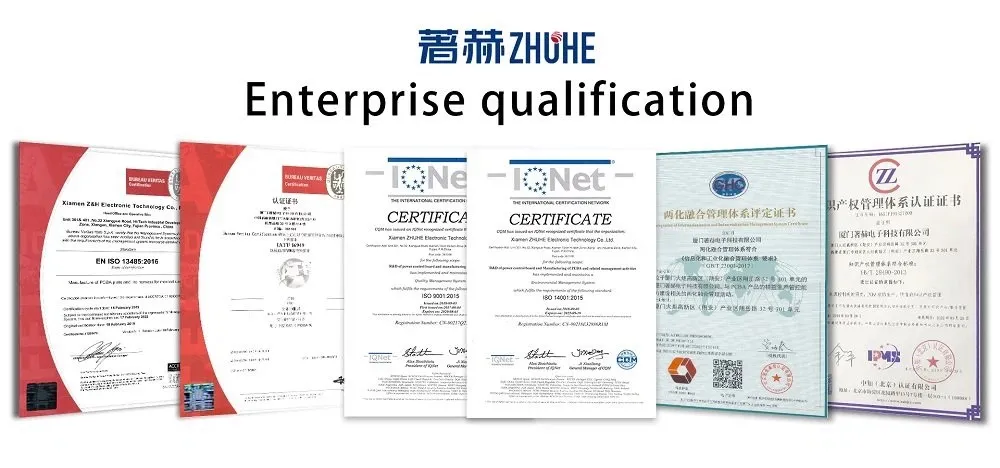
ZHUHE Group has been a comprehensive service provider of electronic technology and electronic products for more than 10 years. Starting from a small company, we have continued to expand the field of electronic applications and provide customers with advanced intelligent control solutions, and have grown to have 11 subsidiaries of our own. We can provide professional OEM/ODM service to our customers. The company has standardized management and insists on providing customers with high-quality products and services.

The group has a strong R&D team and professional automated production lines, gradually introducing advanced production equipment and increasing investment in the automation of production lines to improve production capacity and manufacturing process level, establishing a perfect quality management system and supply chain system; providing the best quality intelligent control solutions and products.

We can provide customers with single and double-sided panels, high and multi-layer panels, soft and hard combination boards, special process soft boards, etc.; we can also customize the products required by customers according to the drawings or samples provided by customers. We strictly control the product quality at every step of the manufacturing process and provide leading technical support. Before cooperating, we will have a professional technical team to answer your questions. During the cooperation, we have a specialized technical team for you. After cooperation, we have specialized technicians to serve you one to one.
Q: How to choose the capacity of an outdoor power supply?
A:1. 500W to 600W outdoor power supply, the battery capacity of 500Wh to 600Wh or so, almost 150,000 mAh, about 100W devices can be powered for about 4–5 hours, 300W devices such as rice cooker power supply for about 1.7 hours, the cell phone can be charged more than 30 times.
2. 1000W-1200W outdoor power supply, the battery capacity of 1000Wh or so, almost 280,000 mAh, can supply power for 100W equipment for about 7–8 hours, 300W equipment for about 2–3 hours, and cell phones can be charged more than 60 times;
3. 1500-2200W outdoor power supply with a battery capacity of about 2000Wh, almost 550,000 mAh, can power a 100W device for about 15 hours, a 300W device for about 5–6 hours, and a cell phone can be charged for 100–150 times.
Q: What are the types of outdoor mobile power?
A: Outdoor mobile power can be categorized into several grades according to the output power, such as below 10W, 10W-20W, 20W-30W, and above 30W. Different output power can provide different charging rates for different electronic devices. At the same time, according to the battery type, outdoor mobile power can be divided into nickel-metal hydride batteries, lithium batteries polymer batteries, and other types.
Q: What are the precautions for outdoor backup power supply?
A: First of all, when using the device, be sure to follow the safety rules in the instructions for use, do not put the power supply directly in the sun, do not turn off the switch of the power supply, and do not use the power supply excessively. In addition, when the energy storage power supply is not used for a long time, it must be placed in a cool place to avoid problems such as battery damage or leakage.
Hot Tags: outdoor backup power supply, China outdoor backup power supply manufacturers, suppliers, factory, Home EV Charger, Comfier Eye Massager, Electric Generator Stator, , Filter Coil Inductor, Relaxo Neck Massager