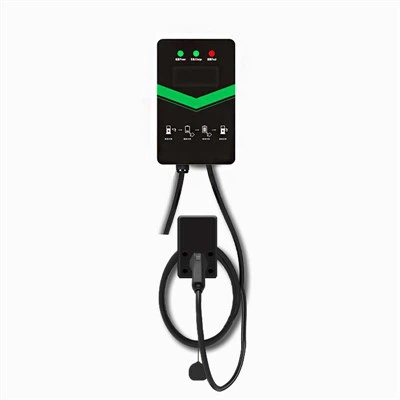
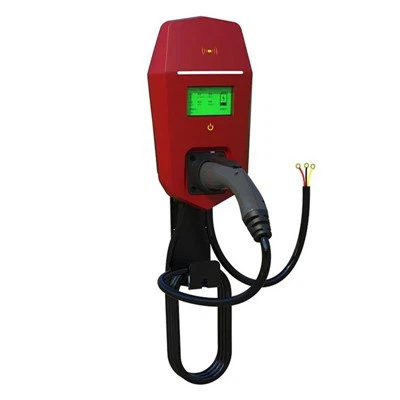
Wall electric car chargers play an important role in environmental protection and energy saving. The charging pile mainly provides electric vehicle charging services, which means that there will be no exhaust gas and noise when charging and will not have any impact on the urban environment and the health of residents, effectively reducing the pollution of air quality and the environment caused by exhaust emissions. At the same time, due to higher efficiency and lower consumption of electric energy, charging piles can also save energy more effectively and reduce energy waste in society.
Use cases for electric vehicle charging in different environments
EV solution providers target all kinds of customers with state-of-the-art smarter, more reliable, more accessible, and emission-free solutions. The latest EV charging solutions have a compact design, high-quality AC wall boxes, DC fast charging with robust connectivity, and separate on-demand EV charging solutions for EV fleets. Some of the business use cases of the Electric Vehicle Charging Solutions are:
Residential Charging: EV Charging solution vendors provide easy-to-install EV chargers for individual houses, housing societies, and residential buildings. Home chargers are well integrated with proper safety features for people and electric vehicles. These chargers are compact, and lightweight, have attached AC input cables and DC output cables, and provide flexibility to be used as portable chargers or to be wall-mounted. These chargers have more than 95% conversion efficiency, lowering the total cost of ownership of battery-powered vehicles.
Public Charging: Public charging stations use AC Type 2 chargers, which are suitable for general applications such as workplaces, businesses, malls, hotels, and public commercial charging. These systems are robust and durable and can be managed by centralized management software. EV charging solutions installed in public places offer simple plug-and-play devices and charge all type 2 compatible vehicles. The admin can use RFID tags for user authentication and remotely manage the applications and energy costs through the software associated with these chargers.
Fleet Charging: EV Fleet charging solutions require a DC charger to support all types of vehicles and charging needs. These fast DC chargers come with cutting-edge technologies in hardware design and application software. They also allow seamless integration with payment platforms and are capable of firmware and software up-gradation over-the-air. These DC chargers can accommodate 30KW – 300 KW of EVs.
Different electric vehicle charging station components
Central to EV charging infrastructure is the charging station. Charging stations receive, store, and deposit energy to recharge EVs.
Every EV charging station has several essential components to support efficient charging. Some integral components of EV charging stations include:
1. Charging Unit
The main element is the charging unit, with multiple ports accommodating different EV models.
Charging units come in different levels:
Level 1 – Suitable for charging EVs with a standard AC power plug. Level 1 only provides a 4-5 mile range per hour as the lowest EV charging level.
Level 2 – Delivering between 3.4–22 kW, Level 2 provides an  adequate EV charging infrastructure for residential, public, business, and commercial settings.
Level 3 – Known as DC (direct current) fast charging, Level 3 units charge EVs with greater power and speed, ideal for short-stop locations like motorway services.
2. Power Supply
Wall electric car chargers rely on a reliable power supply from various components to connect the charging unit to the electrical grid.
Some of these EV charging station components for power supply include:
Distribution panels,Wiring and cables.
3. Control Systems
Another crucial component of an EV charge point is a control system that enables user interaction and network management. Most EV charging stations will include user-friendly touchscreen monitors alongside integrated mobile app platforms.
From viewing information and prices to simply knowing when your EV has finished charging, a control system is an essential communication component for your EV charging station.
4. Network Connection
Using the control system requires connecting your EV charging station to a network or cloud-based platform. This network connection can also support sophisticated features such as mobile app integration, remote management, and data analytics.
The network can also monitor the station usage and track energy consumption with real-time data insights.
5. Safety Features
Safety remains integral when dealing with electricity distribution, whether protecting users, vehicles, or EV charging components. Establishing ground fault protection measures detects and prevents electrical faults, while surge suppression devices protect against voltage spikes and power surges.
Your EV charging station should also consider the environmental factors with weatherproofing where necessary.
6. Regulatory Compliance
EV charge stations must comply with regulatory requirements and industry standards to ensure safety and compatibility with multiple EV models. These standards cover areas such as electrical safety, electromagnetic compatibility, communication protocols, and interoperability between charging equipment.
group profile
With 10 subsidiaries, ZHUHE group is a comprehensive service provider of electronic technology and electronic products, which can provide customers with professional OEM/ODM services, and the company's products and technologies are diversified, covering semiconductor devices, pulse motors, high-frequency transformers, inductors and the core components of various electronic products PCBA (Printed Circuit Board Assembly) & FPCA (Flexible Printed Circuit). Assembly) and other products, focusing on aerospace, military industry, industrial control, data communication, automotive electronics, medical electronics, new energy technology, and AI intelligent technology fields, the main markets at home and abroad, core customers throughout the United States, Japan, Germany, and other domestic and foreign customers.

In recent years, we have continued to deepen our ODM business and explore the new energy vehicle market with the spirit of independent innovation, providing strong technical support for the development of the industry with strong innovation capabilities, and providing professional services and excellent products for the industry with solid patented technical strength. The group has more than 70 software and hardware development engineers, and 86 patents, and has passed the certification of ISO9001, ISO14001, IATF16949, ISO13485, and intellectual property standard implementation system.

The company has a strong R&D team and professional automated production lines, gradually introduces advanced production equipment and increases investment in the degree of automation of the production line, improves production capacity and manufacturing process level, establishes a sound quality management system and supply chain system, and provides the best quality intelligent control solutions and products.

Q: What are the advantages of charging piles?
A: Charging piles have many advantages. First, they can reduce their impact on the environment. Electric cars use electricity instead of fossil fuels, which means they emit far fewer harmful gases than conventional cars. Secondly, the charging pile provides convenience for the driver. Motorists can charge at home or work, eliminating the hassle of queuing at a gas station to refuel. Finally, charging stations can also save drivers money. Compared with gas stations, charging piles have lower operating costs and are more reasonable.
Q: How safe is the wall electric car charger?
A: The safety of the charging pile is very important. According to relevant laws and regulations, charging piles must meet national standards and need to be tested regularly. Moreover, the safety of the charging pile also needs to be paid attention to by the driver himself. When using the charging pile, the driver must pay attention to the dangers such as fire prevention and electric shock, and put the charging pile in a stable position to avoid the charging pile collapsing.
Q: How to maintain the charging pile?
A: To protect the life of the charging pile and ensure its normal operation, the charging pile needs regular maintenance. First of all, the charging station needs to be cleaned regularly. Because charging stations are usually installed outdoors, they need to remove dust and dirt from the surroundings. Secondly, the charging pile needs to be troubleshooting. If the charging pile is faulty or damaged, the driver should immediately contact the service personnel and arrange for a professional technician to inspect and repair it. Finally, the charging station needs to be upgraded. Charging infrastructure technology is constantly evolving, so it needs to be upgraded regularly to keep up with the latest technological developments.
Hot Tags: wall electric car charger, China wall electric car charger manufacturers, suppliers, factory, Bipolar Junction Transistor Bjt,